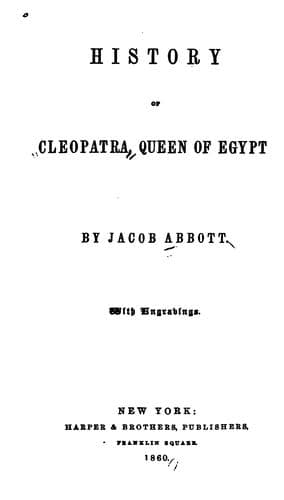
Cleopatra, Queen of Egypt, -30 B.C.; Egypt -- History -- 332-30 B.C. -- Biography; Queens -- Egypt -- Biography
These difficulties and dangers, however, did not at all intimidate Mark
Antony. The anticipation, in fact, of the glory of surmounting them was
one of the main inducements which led him to embark in the enterprise.
The perils of the desert constituted one of the charms which made the
expedition so attractive. He placed himself, therefore, at the head of
his troop of cavalry, and set off across the sands in advance of
Gabinius, to take Pelusium, in order thus to open a way for the main
body of the army into Egypt. Ptolemy accompanied Antony. Gabinius was to
follow.
With all his faults, to call them by no severer name, Mark Antony
possessed certain great excellences of character. He was ardent, but
then he was cool, collected, and sagacious; and there was a certain
frank and manly generosity continually evincing itself in his conduct
and character which made him a great favorite among his men. He was at
this time about twenty-eight years old, of a tall and manly form, and of
an expressive and intellectual cast of countenance. His forehead was
high, his nose aquiline, and his eyes full of vivacity and life. He was
accustomed to dress in a very plain and careless manner, and he assumed
an air of the utmost familiarity and freedom in his intercourse with his
soldiers. He would join them in their sports, joke with them, and
good-naturedly receive their jokes in return; and take his meals,
standing with them around their rude tables, in the open field. Such
habits of intercourse with his men in a commander of ordinary character
would have been fatal to his ascendency over them; but in Mark Antony's
case, these frank and familiar manners seemed only to make the military
genius and the intellectual power which he possessed the more
conspicuous and the more universally admired.
Antony conducted his troop of horsemen across the desert in a very safe
and speedy manner, and arrived before Pelusium. The city was not
prepared to resist him. It surrendered at once, and the whole garrison
fell into his hands as prisoners of war. Ptolemy demanded that they
should all be immediately killed. They were rebels, he said, and, as
such, ought to be put to death. Antony, however, as might have been
expected from his character, absolutely refused to allow of any such
barbarity. Ptolemy, since the power was not yet in his hands, was
compelled to submit, and to postpone gratifying the spirit of vengeance
which had so long been slumbering in his breast to a future day. He
could the more patiently submit to this necessity, since it appeared
that the day of his complete and final triumph over his daughter and all
her adherents was now very nigh at hand.
Public-domain text, read in full here on John Shaqi.
Reviews
Reviews
No reviews yet
Be the first to share your thoughts on this work.
Join the Discussion
Join the discussion
Sign in to leave a comment or review.
Sign InorCreate an account