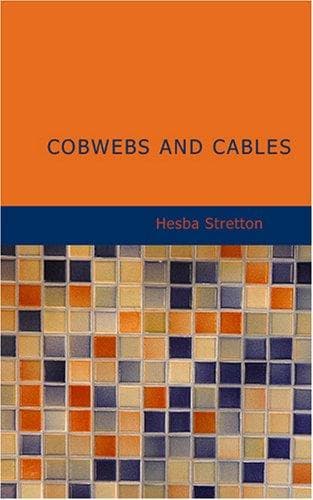
Bankers -- Fiction; Christian life -- Fiction; Fraud -- Fiction; Fugitives from justice -- Fiction
"He is gone!" he answered, "and it was more my fault than his--mine and
Mrs. Sefton's. Whatever wrong he has done it was for her. Remember
that, Madame, and you, Phebe Marlowe. If anything happens, remember it's
my fault more than his, and Mrs. Sefton's fault more than mine."
"Tell me what you mean," urged Madame breathlessly.
"You'll know when Mr. Sefton returns, Madame," he answered, with a
sudden return to his usually calm tone and manner, which was as
startling as his former vehemence had been; "he'll explain all when he
comes home. We must open the bank now; it is striking ten."
He locked the desk and passed out of the comfortably-furnished parlor
into the office beyond, leaving them nothing to do but to return into
the house with their curiosity unsatisfied, and the mother's vague
trouble unsoothed.
"Phebe, Phebe!" cried Felix, as they slowly re-entered the pleasant
home, "my mother says we may go up the river to the osier island; and,
oh, Phebe, she will go with us her own self!"
He had run down the broad staircase to meet them, almost breathless with
delight, and with eyes shining with almost serious rapture. He clasped
Phebe's arm, and, leaning toward her, whispered into her ear,
"She took me in her arms, and said, 'I love you, Felix,' and then she
kissed me as if she meant it, Phebe. It was better than all my birthday
presents put together. My father said to me one day he adored her; and I
adore her. She is my mother, you know--the mother of me, Felix; and I
lie down on the floor and kiss her feet every day, only she does not
know it. When she looks at me her eyes seem to go through me; but, oh,
she does not look at me often."
"She is so different; not like most people," answered Phebe, with her
arms round the boy.
Madame had gone on sadly enough up-stairs to see if she could find out
anything about her son; and Phebe and Felix had turned into the terraced
garden where the boat-house was built close under the bank of the river.
"I should be sorry for my mother to be like other people," said Felix
proudly. "She is like the evening star, my father says, and I always
look out at night to see if it is shining. You know, Phebe, when we row
her up the river, my father and me, we keep quite quiet, only nodding at
one another which way to pull, and she sits silent with eyes that shine
like stars. We would not speak for anything, not one little word, lest
we should disturb her. My father says she is a great genius; not at all
like other people, and worth thousands and thousands of common women.
But I don't think you are a common woman, Phebe," he added, lifting up
his eager face to hers, as if afraid of hurting her feelings, "and my
father does not think so, I know."
"Your father has known me all my life, and has always been my best
friend," said Phebe, with a pleasant smile. "But I am a working-woman,
Felix, and your mother is a lady and a great genius. It is God who has
ordered it so."
Public-domain text, read in full here on John Shaqi.
Reviews
Reviews
No reviews yet
Be the first to share your thoughts on this work.
Join the Discussion
Join the discussion
Sign in to leave a comment or review.
Sign InorCreate an account