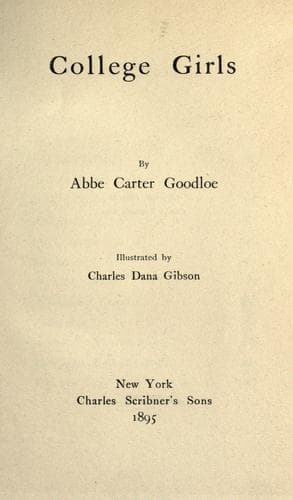
College stories; Women college students -- Fiction
Then she sat down at her desk and tried to write. She remembered the
keen sense of pleasure she always experienced when she had finished a
sonnet or scene of a play, but she was thinking now of how she would
receive Stanhope. “I will give him my hand in a very quiet, friendly way
that will show at once what my decision is. Nothing shall make me alter
or give up my career.”
But it was very hard to give up everything, and she was very young and
her friends thought her beautiful. Could there be no compromise? After
all life need not be so dreary, and Paul Stanhope was distinctly the
nicest and most eligible man she knew. Any number of girls liked him
tremendously, and she sighed as she thought that she was keeping some
girl from getting a very good husband indeed. This idea, though not
wholly distasteful to her, brought her sharply back to her resolutions,
and she picked up her Calderon. She had been reading it the day before
and had left it turned down at the page. Suddenly a great pity for
Calderon took possession of her. After all he was so dead now! Could he
know how famous he was? Was he famous while he lived? Did his fame bring
him love and happiness? She did not even know. Underneath the Calderon
lay a copy of a poet’s works--a poet now famous and beloved, but who had
died miserably poor and unknown. By the side of this volume lay the last
number of a popular magazine. She had bought it because it contained a
story by a man whom all the world was talking about. She had read in the
morning’s paper that he had just been divorced from his wife. The sight
of the book sickened her. She turned away and opened the case where she
kept her Shakespeare, and took out a book at random. It was the sonnets.
He, too, the greatest and wisest, had been wretchedly unhappy.
Suddenly the futility of all effort took hold of her. Suppose she should
drudge her life away, never taste of happiness, die, and be only known
as “Hungerford the dramatist.” She shuddered. In the years to come many
people might not even know whether “Hungerford” had been a man or a
woman. But she could never hold up her head again if she should
relinquish her “career” now. What would her friends think? She felt that
she had burned her ships behind her when she had published her tragedy,
and that the eyes of her world were upon her.
Public-domain text, read in full here on John Shaqi.
Reviews
Reviews
No reviews yet
Be the first to share your thoughts on this work.
Elsewhere in the archive
Join the Discussion
Join the discussion
Sign in to leave a comment or review.
Sign InorCreate an account