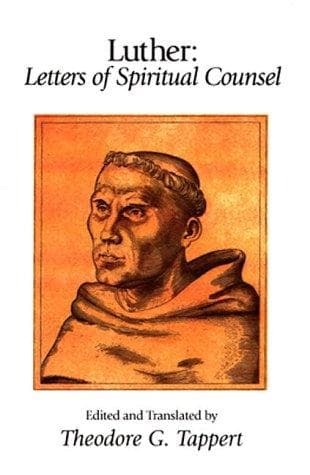
Commentary on Genesis, Vol. 1: Luther on the CreationLuther, Martin
ReligionChristian
Commentary on Genesis, Vol. 1: Luther on the Creation
Luther, Martin
Bible. Genesis -- Commentaries
In like manner the closing of paradise and the stationing of a guard
of Cherubim, with brandished swords of fire to prevent any one from
re-entering, evidently signify nothing more or less than that man
while living in the world "without," and destitute of faith in Christ,
can endure neither the light of the law nor the light of the Gospel.
And hence it is that Paul says concerning the Jews, "that they could
not steadfastly behold the face of Moses, and that Moses was obliged
to put a veil over his face on that account," 2 Cor. 3:7, 13.
"The tree of death" in paradise represents the law, and "the tree of
life" the Gospel or Christ. And to neither of these trees can any
approach who have not faith in Christ. For they are prevented by the
sword of the angels on guard, who cannot endure hypocrisy or poisonous
self-righteousness. But who so acknowledges his sin and believes in
Christ, to him the gate of paradise stands open, because he brings
with him, not his own righteousness, but the righteousness of Christ,
which righteousness the Gospel therefore preaches unto all men, in
order that all might rest upon it and be saved.
But there is no need that we should pursue this subject of allegories
further. Let it suffice that we have offered these admonitions, that
we might thereby direct those who use allegories to adopt those
allegories alone, which the apostles have indicated and justified, and
which have their sure foundation in the very letter and in the
historical facts of the Scriptures.
But we must offer a word concerning the cherubim. Frequent mention is
made of them throughout the holy Scriptures. In the Latin authors we
find nothing stated concerning them. They merely observe that the term
CHERUB signifies a plentitude of knowledge. Among the Greek authors
Dionysius speaks of the cherubim. There is a boasting report that
Dionysius was a disciple of the Apostle Paul, but that is not true.
Dionysius was a man full of the most vain absurdities, in which he
abounds in his disputations concerning the heavenly and the
ecclesiastical hierarchy. His imaginations make nine choirs, as so
many ranks or spheres of heavenly beings. In the supreme hierarchy he
places first the seraphim; next, the cherubim; next, thrones; next,
dominions; next, powers; and lastly, principalities. And then in the
lower or inferior hierarchy, he places first potentates; next,
archangels; and last of all, angels. Now, who does not see that all
these representations are nothing more nor less than idle and futile
human inventions?
Public-domain text, read in full here on John Shaqi.
Reviews
Reviews
No reviews yet
Be the first to share your thoughts on this work.
Elsewhere in the archive
Join the Discussion
Join the discussion
Sign in to leave a comment or review.
Sign InorCreate an account