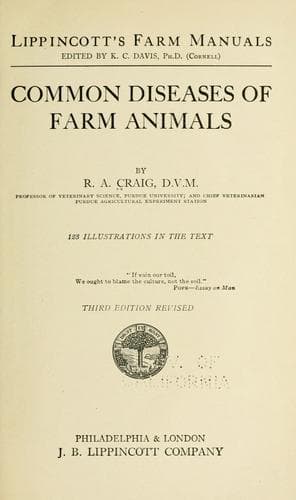
Common Diseases of Farm AnimalsCraig, Robert Alexander
Science
Common Diseases of Farm Animals
Craig, Robert Alexander
Veterinary medicine
When animals are allowed to "rough it" during the cold weather, the coat of
hair becomes heavy and rough. This is a provision of nature and enables
them, as long as the coat is dry, to withstand severe cold.
Horses that are in a low physical condition, or when accustomed to hard
work, if then kept in a stall for a few days without exercise, commonly
show a filling of the cannon regions of the posterior extremities. This
condition also commonly occurs in disease and in mares that have reached
the latter period of pregnancy. Sheep that are unthrifty and in a poor
physical condition, especially if this is due to internal parasites,
frequently develop dropsical swellings in the region of the jaw, or neck.
Body Excretions.--The character of the body excretions, faeces and urine
may become greatly changed in certain diseases. It is important that the
stockman or veterinarian observe these changes, and in certain diseases
make an analysis of the urine. This may be necessary in order properly to
diagnose the case.
Behavior of the Animal.--When the body temperature is high, the animal may
appear greatly depressed. If suffering severe pain, it may be restless. In
diseases of the nervous system, the behavior of the animal may be greatly
changed. Spasms, convulsions, general local paralysis, stupid condition and
unconsciousness may occur as symptoms of this class of disease.
QUESTIONS
1. What information is necessary in order to be able to recognize or
diagnose disease? 2. What are the general symptoms of disease?
3. What are the subjective symptoms of disease?
4. Describe method of taking the pulse beat in the different animals and
its character in health and disease.
5. Give the ratio of the heart beats to the respirations in the different
species of animals.
6. What are the normal body temperatures in the different domestic animals?
7. What are the visible mucous membranes?
8. Is the condition of the coat and skin any help in the recognition of
disease?
CHAPTER III
TREATMENT
Preventive Treatment.--The subject of preventive medicine becomes more
important as our knowledge of the cause of disease advances. A knowledge of
feeds, methods of feeding, care, sanitation and the use of such biological
products as bacterins, vaccines and protective serums is of the greatest
importance to the farmer and veterinarian. We are beginning to realize that
one of the most important secrets of profitable and successful stock
raising is the prevention of disease; that the agricultural colleges are
doing a great work in helping to teach farmers that there are right and
wrong methods of feeding and caring for animals; that the practice of
sanitation in caring for animals is the cheapest method of treating
disease; and that it is advisable to practise radical methods of control,
when necessary, in order to rid the herd of an infectious disease.
Public-domain text, read in full here on John Shaqi.
Reviews
Reviews
No reviews yet
Be the first to share your thoughts on this work.
Join the Discussion
Join the discussion
Sign in to leave a comment or review.
Sign InorCreate an account