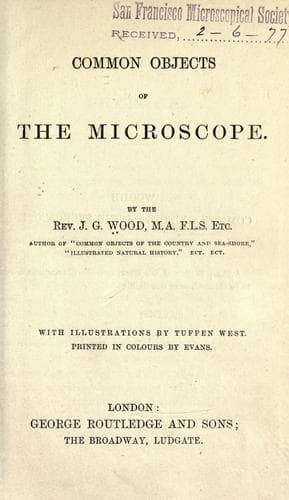
Common objects of the microscopeWood, J. G. (John George)
Science
Common objects of the microscope
Wood, J. G. (John George)
Microscopes; Microscopy
FIG.
1. Laurel leaf, transverse section
2. Starch, Wheat
3. Do. from Pudding
4. Do. Potato
5. Outer Skin, Capsicum pod
6. Starch, Parsnip
7. Do. Arrow Root, West Indian
8. Do. “Tousles Mois”
9. Do. in cell of Potato
10. Do. Indian Corn
11. Do. Sago
12. Do. Tapioca
13. Root, Yellow Water-Lily
14. Starch, Rice
15. Do. Horsebean
16. Do. Oat
17. Pollen, Snowdrop
18. Do. Wallflower
19. Do. Willow Herb, a pollen tube
20. Do. Violet
21. Do. Musk Plant
22. Do. Apple
23. Do. Dandelion
24. Do. Sowthistle
25. Do. Lily
26. Do. Heath
27. Do. Heath, another species
28. Pollen, Furze
29. Do. Tulip
30. Petal, Pelargonium
31. Do. Periwinkle
32. Do. Golden Balsam
33. Do. Snapdragon
34. Do. Primrose
35. Do. Scarlet Geranium
36. Pollen, Crocus
37. Do. Hollyhock
38. Fruit, Galium, Goosegrass
39. A hook of ditto more magnified
40. Seed, Red Valerian
41. Portion of Parachute of same, more magnified
42. Seed, Foxglove
43. Do. Sunspurge
44. Parachute, Dandelion seed
45. Seed, Dandelion
46. Do. Hair of Parachute
47. Do. Yellow Snapdragon
48. Do. Mullein
49. Do. Robin Hood
50. Do. Bur-reed
51. Do. Willow Herb
52. Do. Musk Mallow
[Illustration: III.]
On focusing with great care, the surface of each granule will be seen
to be covered with very minute dark lines, arranged in a manner which
can be readily comprehended from Fig. 4, which represents two granules
of potato starch as they appear when removed from the cell in which
they took their origin. All the lines evidently refer to the little
dark spots at the end of the granule, called technically the “hilum,”
and represent the limits of successive layers of material deposited
one after another. The lines in question are very much better seen if
the substage condenser be used with a small central stop, so as to
obtain partial dark-field illumination. Otherwise they are often very
difficult of detection.
In the earliest stages of their growth the starch granules appear to be
destitute of these markings, or at all events they are so few and so
delicate as not to be visible even with the most perfect instruments,
and it is not until the granules assume a comparatively large size that
the external markings become distinctly perceptible.
Public-domain text, read in full here on John Shaqi.
Reviews
Reviews
No reviews yet
Be the first to share your thoughts on this work.
Join the Discussion
Join the discussion
Sign in to leave a comment or review.
Sign InorCreate an account