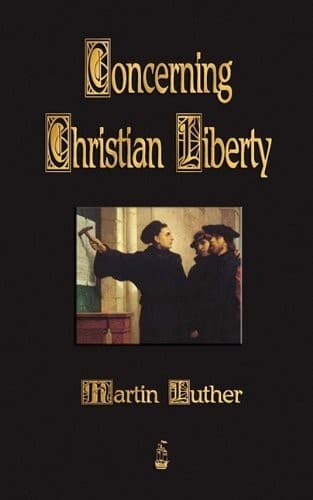
Concerning Christian Liberty; with Letter of Martin Luther to Pope Leo X. — John Shaqi
Concerning Christian Liberty; with Letter of Martin Luther to Pope Leo X.Luther, Martin
ReligionChristian
Concerning Christian Liberty; with Letter of Martin Luther to Pope Leo X.
Luther, Martin
Reformation -- Germany
So it is with the works of a believer. Being by his faith replaced
afresh in paradise and created anew, he does not need works for his
justification, but that he may not be idle, but may exercise his own
body and preserve it. His works are to be done freely, with the sole
object of pleasing God. Only we are not yet fully created anew in
perfect faith and love; these require to be increased, not, however,
through works, but through themselves.
A bishop, when he consecrates a church, confirms children, or performs
any other duty of his office, is not consecrated as bishop by these
works; nay, unless he had been previously consecrated as bishop, not one
of those works would have any validity; they would be foolish, childish,
and ridiculous. Thus a Christian, being consecrated by his faith, does
good works; but he is not by these works made a more sacred person, or
more a Christian. That is the effect of faith alone; nay, unless he were
previously a believer and a Christian, none of his works would have any
value at all; they would really be impious and damnable sins.
True, then, are these two sayings: "Good works do not make a good man,
but a good man does good works"; "Bad works do not make a bad man, but a
bad man does bad works." Thus it is always necessary that the substance
or person should be good before any good works can be done, and that
good works should follow and proceed from a good person. As Christ says,
"A good tree cannot bring forth evil fruit, neither can a corrupt tree
bring forth good fruit" (Matt. vii. 18). Now it is clear that the fruit
does not bear the tree, nor does the tree grow on the fruit; but, on the
contrary, the trees bear the fruit, and the fruit grows on the trees.
As then trees must exist before their fruit, and as the fruit does not
make the tree either good or bad, but on the contrary, a tree of either
kind produces fruit of the same kind, so must first the person of the
man be good or bad before he can do either a good or a bad work; and his
works do not make him bad or good, but he himself makes his works either
bad or good.
We may see the same thing in all handicrafts. A bad or good house does
not make a bad or good builder, but a good or bad builder makes a good
or bad house. And in general no work makes the workman such as it is
itself; but the workman makes the work such as he is himself. Such
is the case, too, with the works of men. Such as the man himself is,
whether in faith or in unbelief, such is his work: good if it be done
in faith; bad if in unbelief. But the converse is not true that, such as
the work is, such the man becomes in faith or in unbelief. For as works
do not make a believing man, so neither do they make a justified man;
but faith, as it makes a man a believer and justified, so also it makes
his works good.
Public-domain text, read in full here on John Shaqi.
Reviews
Reviews
No reviews yet
Be the first to share your thoughts on this work.
Join the Discussion
Join the discussion
Sign in to leave a comment or review.
Sign InorCreate an account