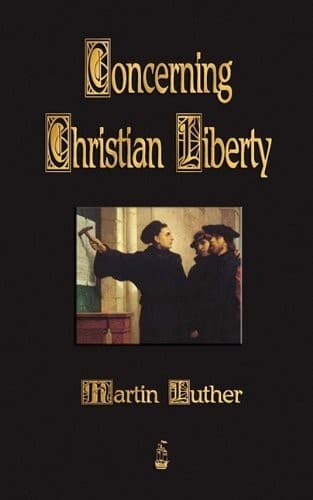
Concerning Christian Liberty; with Letter of Martin Luther to Pope Leo X.Luther, Martin
ReligionChristian
Concerning Christian Liberty; with Letter of Martin Luther to Pope Leo X.
Luther, Martin
Reformation -- Germany
From all this it is easy to perceive on what principle good works are
to be cast aside or embraced, and by what rule all teachings put forth
concerning works are to be understood. For if works are brought forward
as grounds of justification, and are done under the false persuasion
that we can pretend to be justified by them, they lay on us the yoke
of necessity, and extinguish liberty along with faith, and by this very
addition to their use they become no longer good, but really worthy of
condemnation. For such works are not free, but blaspheme the grace of
God, to which alone it belongs to justify and save through faith. Works
cannot accomplish this, and yet, with impious presumption, through
our folly, they take it on themselves to do so; and thus break in with
violence upon the office and glory of grace.
We do not then reject good works; nay, we embrace them and teach them in
the highest degree. It is not on their own account that we condemn them,
but on account of this impious addition to them and the perverse notion
of seeking justification by them. These things cause them to be only
good in outward show, but in reality not good, since by them men are
deceived and deceive others, like ravening wolves in sheep's clothing.
Now this leviathan, this perverted notion about works, is invincible
when sincere faith is wanting. For those sanctified doers of works
cannot but hold it till faith, which destroys it, comes and reigns in
the heart. Nature cannot expel it by her own power; nay, cannot even see
it for what it is, but considers it as a most holy will. And when
custom steps in besides, and strengthens this pravity of nature, as has
happened by means of impious teachers, then the evil is incurable, and
leads astray multitudes to irreparable ruin. Therefore, though it is
good to preach and write about penitence, confession, and satisfaction,
yet if we stop there, and do not go on to teach faith, such teaching
is without doubt deceitful and devilish. For Christ, speaking by His
servant John, not only said, "Repent ye," but added, "for the kingdom of
heaven is at hand" (Matt. iii. 2).
For not one word of God only, but both, should be preached; new and old
things should be brought out of the treasury, as well the voice of
the law as the word of grace. The voice of the law should be brought
forward, that men may be terrified and brought to a knowledge of their
sins, and thence be converted to penitence and to a better manner of
life. But we must not stop here; that would be to wound only and not to
bind up, to strike and not to heal, to kill and not to make alive, to
bring down to hell and not to bring back, to humble and not to exalt.
Therefore the word of grace and of the promised remission of sin must
also be preached, in order to teach and set up faith, since without
that word contrition, penitence, and all other duties, are performed and
taught in vain.
Public-domain text, read in full here on John Shaqi.
Reviews
Reviews
No reviews yet
Be the first to share your thoughts on this work.
Join the Discussion
Join the discussion
Sign in to leave a comment or review.
Sign InorCreate an account