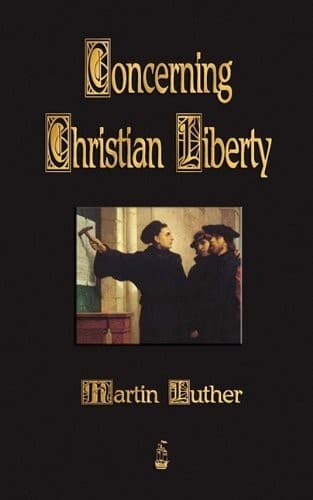
Concerning Christian Liberty; with Letter of Martin Luther to Pope Leo X.Luther, Martin
ReligionChristian
Concerning Christian Liberty; with Letter of Martin Luther to Pope Leo X.
Luther, Martin
Reformation -- Germany
Next came Charles Miltitz, also a nuncio from your Blessedness. He,
though he went up and down with much and varied exertion, and omitted
nothing which could tend to restore the position of the cause thrown
into confusion by the rashness and pride of Cajetan, had difficulty,
even with the help of that very illustrious prince the Elector
Frederick, in at last bringing about more than one familiar conference
with me. In these I again yielded to your great name, and was prepared
to keep silence, and to accept as my judge either the Archbishop of
Treves, or the Bishop of Naumburg; and thus it was done and concluded.
While this was being done with good hope of success, lo! that other and
greater enemy of yours, Eccius, rushed in with his Leipsic disputation,
which he had undertaken against Carlstadt, and, having taken up a
new question concerning the primacy of the Pope, turned his arms
unexpectedly against me, and completely overthrew the plan for peace.
Meanwhile Charles Miltitz was waiting, disputations were held, judges
were being chosen, but no decision was arrived at. And no wonder! for
by the falsehoods, pretences, and arts of Eccius the whole business was
brought into such thorough disorder, confusion, and festering soreness,
that, whichever way the sentence might lean, a greater conflagration was
sure to arise; for he was seeking, not after truth, but after his own
credit. In this case too I omitted nothing which it was right that I
should do.
I confess that on this occasion no small part of the corruptions of Rome
came to light; but, if there was any offence in this, it was the fault
of Eccius, who, in taking on him a burden beyond his strength, and in
furiously aiming at credit for himself, unveiled to the whole world the
disgrace of Rome.
Here is that enemy of yours, Leo, or rather of your Court; by his
example alone we may learn that an enemy is not more baneful than a
flatterer. For what did he bring about by his flattery, except evils
which no king could have brought about? At this day the name of the
Court of Rome stinks in the nostrils of the world, the papal authority
is growing weak, and its notorious ignorance is evil spoken of. We
should hear none of these things, if Eccius had not disturbed the plans
of Miltitz and myself for peace. He feels this clearly enough himself in
the indignation he shows, too late and in vain, against the publication
of my books. He ought to have reflected on this at the time when he was
all mad for renown, and was seeking in your cause nothing but his own
objects, and that with the greatest peril to you. The foolish man hoped
that, from fear of your name, I should yield and keep silence; for I
do not think he presumed on his talents and learning. Now, when he sees
that I am very confident and speak aloud, he repents too late of his
rashness, and sees--if indeed he does see it--that there is One in
heaven who resists the proud, and humbles the presumptuous.
Public-domain text, read in full here on John Shaqi.
Reviews
Reviews
No reviews yet
Be the first to share your thoughts on this work.
Join the Discussion
Join the discussion
Sign in to leave a comment or review.
Sign InorCreate an account