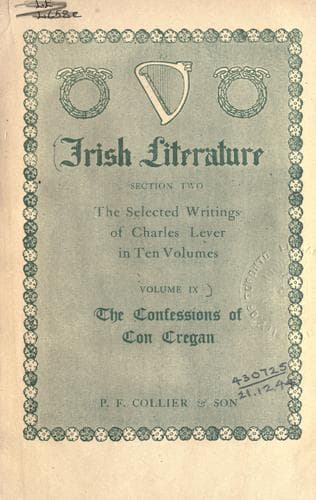
Confessions Of Con Cregan, the Irish Gil BlasLever, Charles
General
Confessions Of Con Cregan, the Irish Gil Blas
Lever, Charles
Ireland -- Fiction
As each emigrant ship arrived, hosts of these idlers of the Lower Town
beset the newly landed strangers, and by their voice and accent imposed
upon the poor wanderers. The very tones of the old country were a magic
the new-comers could not withstand, after weeks of voyaging that seemed
like years of travel. Whatever reminded them of the country they had
quitted, ay,--strange inconsistency of the human heart!--of the land
they had left for very hopelessness, touched their hearts, and moved
them to the very tenderest emotions. To trade on this susceptibility
became a recognized livelihood; so that the quays were crowded with
idle vagabonds who sought out the prey with as much skill as a West-end
waiter displays in detecting the rank of a new arrival.
This filthy locality, too, contained all the lodging-houses resorted to
by the emigrants, who were easily persuaded to follow their "countryman"
wherever he might lead. Here were spent the days--sometimes, unhappily,
the weeks--before they could fix upon the part of the country to which
they should bend their steps; and here, but too often, were wasted
in excess and debauchery the little hoards that had cost years to
accumulate, till farther progress became impossible; and the stranger
who landed but a few weeks back full of strong hope, sunk down into the
degraded condition of those who had been his ruin,--the old story, the
dupe become blackleg.
It were well if deceit and falsehood, if heartless treachery and
calculating baseness, were all that went forward here. But not so;
crimes of every character were rife also, and not an inhabitant of the
city, with money or character, would have, for any consideration, put
foot within this district after nightfall. The very cries that broke
upon the stillness of the night were often heard in the Upper Town;
and whenever a shriek of agony arose, or the heartrending cry for help,
prudent citizens would close the window, and say, "It is some of the
Irish in the Lower Town,"--a comprehensive statement that needed no
commentary.
Towards this pleasant locality I now hastened, with a kind of
instinctive sense that I had some claims on the sanctuary. It
chanced that an emigrant ship which had arrived that evening was just
disembarking its passengers; mingling with the throng of which, I
entered the filthy and narrow lanes of this Alsatia. The new arrivals
were all Irish, and, as usual, were heralded by parties of the resident
population, eagerly canvassing them for this or that lodging-house. Had
not my own troubles been enough for me, I should have felt interested
in the strange contrast between the simple peasant first stepping on a
foreign shore, and the shrewd roguery of him who proposed guidance, and
who doubtless had himself once been as unsuspecting and artless as those
he now cajoled and endeavored to dupe.
Public-domain text, read in full here on John Shaqi.
Reviews
Reviews
No reviews yet
Be the first to share your thoughts on this work.
Elsewhere in the archive
Join the Discussion
Join the discussion
Sign in to leave a comment or review.
Sign InorCreate an account