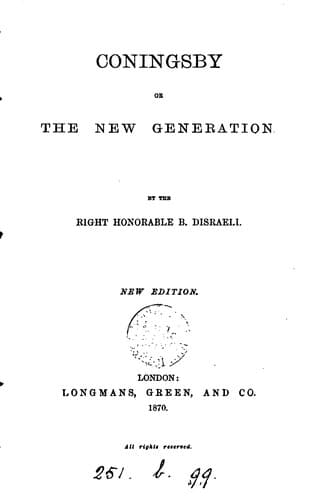
Coningsby; Or, The New GenerationDisraeli, Benjamin, Earl of Beaconsfield
General
Coningsby; Or, The New Generation
Disraeli, Benjamin, Earl of Beaconsfield
Great Britain -- Fiction; Political fiction; Politicians -- Fiction
‘I beg your pardon, sir,’ said Coningsby, coming forward, and with an
air of earnestness and grace that arrested the step of the manufacturer.
‘I am aware of the regulations, but would beg to be permitted to
infringe them.’
‘It cannot be, sir,’ said Mr. Millbank, moving.
‘I thought, sir, being here only for a day, and as a friend of your
son--’
Mr. Millbank stopped and said,
‘Oh! a friend of Oswald’s, eh? What, at Eton?’
‘Yes, sir, at Eton; and I had hoped perhaps to have found him here.’
‘I am very much engaged, sir, at this moment,’ said Mr. Millbank; ‘I am
sorry I cannot pay you any personal attention, but my clerk will show
you everything. Mr. Benson, let this gentleman see everything;’ and he
withdrew.
‘Be pleased to write your name here, sir,’ said Mr. Benson, opening
a book, and our friend wrote his name and the date of his visit to
Millbank:
‘HARRY CONINGSBY, Sept. 2, 1836.’
Coningsby beheld in this great factory the last and the most refined
inventions of mechanical genius. The building had been fitted up by a
capitalist as anxious to raise a monument of the skill and power of his
order, as to obtain a return for the great investment.
‘It is the glory of Lancashire!’ exclaimed the enthusiastic Mr. Benson.
The clerk spoke freely of his master, whom he evidently idolised, and
his great achievements, and Coningsby encouraged him. He detailed to
Coningsby the plans which Mr. Millbank had pursued, both for the moral
and physical well-being of his people; how he had built churches,
and schools, and institutes; houses and cottages on a new system of
ventilation; how he had allotted gardens; established singing classes.
‘Here is Mr. Millbank,’ continued the clerk, as he and Coningsby,
quitting the factory, re-entered the court.
Mr. Millbank was approaching the factory, and the moment that he
observed them, he quickened his pace.
‘Mr. Coningsby?’ he said, when he reached them. His countenance was
rather disturbed, and his voice a little trembled, and he looked on our
friend with a glance scrutinising and serious. Coningsby bowed.
‘I am sorry that you should have been received at this place with
so little ceremony, sir,’ said Mr. Millbank; ‘but had your name been
mentioned, you would have found it cherished here.’ He nodded to the
clerk, who disappeared.
Coningsby began to talk about the wonders of the factory, but Mr.
Millbank recurred to other thoughts that were passing in his mind. He
spoke of his son: he expressed a kind reproach that Coningsby should
have thought of visiting this part of the world without giving them
some notice of his intention, that he might have been their guest, that
Oswald might have been there to receive him, that they might have made
arrangements that he should see everything, and in the best manner; in
short, that they might all have shown, however slightly, the deep sense
of their obligations to him.
Public-domain text, read in full here on John Shaqi.
Reviews
Reviews
No reviews yet
Be the first to share your thoughts on this work.
Elsewhere in the archive
Join the Discussion
Join the discussion
Sign in to leave a comment or review.
Sign InorCreate an account