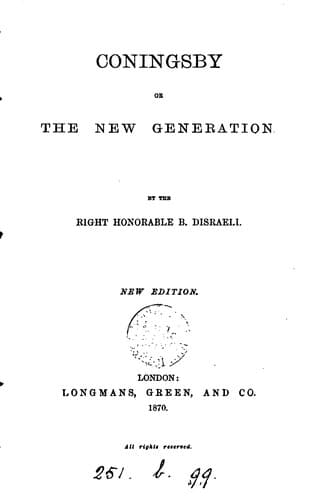
Coningsby; Or, The New GenerationDisraeli, Benjamin, Earl of Beaconsfield
General
Coningsby; Or, The New Generation
Disraeli, Benjamin, Earl of Beaconsfield
Great Britain -- Fiction; Political fiction; Politicians -- Fiction
That delicious plain, studded with every creation of graceful
culture; hamlet and hall and grange; garden and grove and park; that
castle-palace, grey with glorious ages; those antique spires, hoar with
faith and wisdom, the chapel and the college; that river winding through
the shady meads; the sunny glade and the solemn avenue; the room in the
Dame’s house where we first order our own breakfast and first feel we
are free; the stirring multitude, the energetic groups, the individual
mind that leads, conquers, controls; the emulation and the affection;
the noble strife and the tender sentiment; the daring exploit and the
dashing scrape; the passion that pervades our life, and breathes in
everything, from the aspiring study to the inspiring sport: oh! what
hereafter can spur the brain and touch the heart like this; can give us
a world so deeply and variously interesting; a life so full of quick and
bright excitement, passed in a scene so fair?
CHAPTER III.
Lord Monmouth, who detested popular tumults as much as he despised
public opinion, had remained during the agitating year of 1831 in his
luxurious retirement in Italy, contenting himself with opposing the
Reform Bill by proxy. But when his correspondent, Mr. Rigby, had
informed him, in the early part of the spring of 1832, of the
probability of a change in the tactics of the Tory party, and that
an opinion was becoming prevalent among their friends, that the great
scheme must be defeated in detail rather than again withstood on
principle, his Lordship, who was never wanting in energy when his own
interests were concerned, immediately crossed the Alps, and travelled
rapidly to England. He indulged a hope that the weight of his presence
and the influence of his strong character, which was at once shrewd and
courageous, might induce his friends to relinquish their half measure,
a course to which his nature was repugnant. At all events, if they
persisted in their intention, and the Bill went into committee, his
presence was indispensable, for in that stage of a parliamentary
proceeding proxies become ineffective.
The counsels of Lord Monmouth, though they coincided with those of the
Duke of Wellington, did not prevail with the Waverers. Several of these
high-minded personages had had their windows broken, and they were of
opinion that a man who lived at Naples was not a competent judge of the
state of public feeling in England. Besides, the days are gone by for
senates to have their beards plucked in the forum. We live in an age of
prudence. The leaders of the people, now, generally follow. The truth
is, the peers were in a fright. ‘Twas a pity; there is scarcely a less
dignified entity than a patrician in a panic.
Public-domain text, read in full here on John Shaqi.
Reviews
Reviews
No reviews yet
Be the first to share your thoughts on this work.
Join the Discussion
Join the discussion
Sign in to leave a comment or review.
Sign InorCreate an account