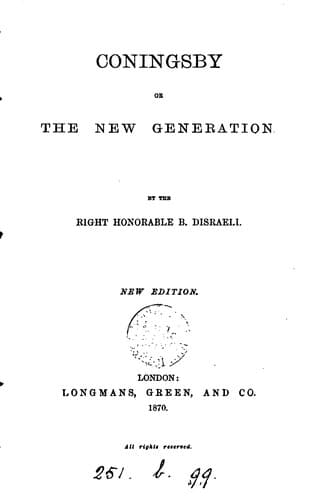
Coningsby; Or, The New GenerationDisraeli, Benjamin, Earl of Beaconsfield
General
Coningsby; Or, The New Generation
Disraeli, Benjamin, Earl of Beaconsfield
Great Britain -- Fiction; Political fiction; Politicians -- Fiction
The Duke shook his head.
‘No; Peel means to do it himself.’
But at this moment Mr. Ornisby begged his Grace to lead them to dinner.
‘Something is to be written.’ It is curious to recall the vague terms
in which the first projection of documents, that are to exercise a vast
influence on the course of affairs or the minds of nations, is often
mentioned. This ‘something to be written’ was written; and speedily; and
has ever since been talked of.
We believe we may venture to assume that at no period during the
movements of 1834-5 did Sir Robert Peel ever believe in the success
of his administration. Its mere failure could occasion him little
dissatisfaction; he was compensated for it by the noble opportunity
afforded to him for the display of those great qualities, both moral and
intellectual, which the swaddling-clothes of a routine prosperity had
long repressed, but of which his opposition to the Reform Bill had
given to the nation a significant intimation. The brief administration
elevated him in public opinion, and even in the eye of Europe; and it
is probable that a much longer term of power would not have contributed
more to his fame.
The probable effect of the premature effort of his party on his future
position as a Minister was, however, far from being so satisfactory. At
the lowest ebb of his political fortunes, it cannot be doubted that Sir
Robert Peel looked forward, perhaps through the vista of many years, to
a period when the national mind, arrived by reflection and experience
at certain conclusions, would seek in him a powerful expositor of its
convictions. His time of life permitted him to be tranquil in adversity,
and to profit by its salutary uses. He would then have acceded to power
as the representative of a Creed, instead of being the leader of a
Confederacy, and he would have been supported by earnest and enduring
enthusiasm, instead of by that churlish sufferance which is the
result of a supposed balance of advantages in his favour. This is
the consequence of the tactics of those short-sighted intriguers, who
persisted in looking upon a revolution as a mere party struggle, and
would not permit the mind of the nation to work through the inevitable
phases that awaited it. In 1834, England, though frightened at the
reality of Reform, still adhered to its phrases; it was inclined,
as practical England, to maintain existing institutions; but, as
theoretical England, it was suspicious that they were indefensible.
Public-domain text, read in full here on John Shaqi.
Reviews
Reviews
No reviews yet
Be the first to share your thoughts on this work.
Elsewhere in the archive
Join the Discussion
Join the discussion
Sign in to leave a comment or review.
Sign InorCreate an account