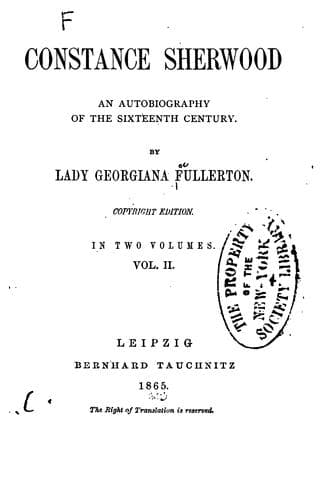
Constance Sherwood: An Autobiography of the Sixteenth CenturyFullerton, Georgiana
History
Constance Sherwood: An Autobiography of the Sixteenth Century
Fullerton, Georgiana
Great Britain -- History -- Elizabeth, 1558-1603 -- Fiction
"Verily," I answered, "I know not, Master Rookwood; but I have so much
trust in Almighty God that he would, in such a case, put words into my
mouth which should be true, and yet mislead evil-purposed men, or that
he shall keep me from such fearful straits, or forgive me if, in the
stress of a great peril, I unwittingly should err."
"And I pray you," Hubert then said, as if not greatly caring to pursue
the theme, "what be your thought concerning the unhappy youth Olindo,
who did so dote on this maiden that, fearful of offending there where
above all he desired to please, had, greatly as he loved, little
hoped, nothing asked, and not so much as revealed his passion until a
common fate bound both to an equal death?"
"I thought not at all on him," I answered; "but only on Sophronisba."
At which he sighed and read further: "That all wept for her who,
albeit doomed to a cruel death, wept not for herself, but in this wise
secretly reproved the fond youth's weeping: 'Friend,' quoth she,
'other thoughts, other tears, other sighs, do beseem this hour. Think
of thy sins, and God's great recompense for the good. Suffer for his
sole sake, and torment shall be sweet. See how fair the heavens do
show, the sun how bright, as it were to cheer and lure us onward!'"
"Ah!" I exclaimed, "shame on him who did need to be so exhorted, who
should have been the most valiant, being a man!" To the which he
quickly replied:
"He willed to die of his own free will rather than to live without her
whom he jewelled more than life: but in the matter of grieving love
doth make cowards of those who should else have been brave."
"Me thinks, rather," I answered, "that in noble hearts love's effects
should be noble."
"Bethink you, Mistress Constance," he then asked, "that Sophronisba
did act commendably, insomuch that when an unlooked-for deliverance
came, she refused not to be united in life to him that had willed to
be united to her in death."
"You may think me ungrateful, sir," answered; "but other merits
methinks than fondness for herself should have won so great a heart."
"You be hard to content, Mistress Constance," he answered somewhat
resentfully. "To satisfy you, I perceive one should have a hard as
well as a great heart."
"Nay," I cried, "I praise not hardness, but love not softness either.
You that be so learned, I pray you find the word which doth express
what pleaseth me in a man."
"I know not the word," he answered; "I would I knew the substance of
your liking, that I might furnish myself with it."
Whereupon our discourse ended that day; but it ministered food to my
thoughts, and I fear me also to a vain content that one so gifted with
learning and great promise of future greatness should evince something
of regard beyond a mutual friendship for one as ignorant and young as
I then was.
Public-domain text, read in full here on John Shaqi.
Reviews
Reviews
No reviews yet
Be the first to share your thoughts on this work.
Elsewhere in the archive
Join the Discussion
Join the discussion
Sign in to leave a comment or review.
Sign InorCreate an account