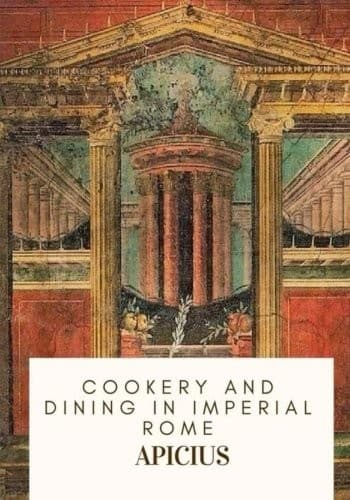
According to the mention by various writers, this man, M. Gabius
Apicius, was one of the many ancient gastronomers who took the subject
of food seriously. Assuming a scientific attitude towards eating and
food they were criticised for paying too much attention to their
table. This was considered a superfluous and indeed wicked luxury when
frugality was a virtue. These men who knew by intuition the importance
of knowing something about nutrition are only now being vindicated by
the findings of modern science.
M. Gabius Apicius, this most famous of the celebrated and much
maligned bon-vivants, quite naturally took great interest in the
preparation of food. He is said to have originated many dishes
himself; he collected much material on the subject and he endowed a
school for the teaching of cookery and for the promotion of culinary
ideas. This very statement by his critics places him high in our
esteem, as it shows him up as a scientist and educator. He spent his
vast fortune for food, as the stories go, and when he had only a
quarter million dollars left (a paltry sum today but a considerable
one in those days when gold was scarce and monetary standards in a
worse muddle than today) Apicius took his own life, fearing that he
might have to starve to death some day.
This story seems absurd on the face of it, yet Seneca and Martial tell
it (both with different tendencies) and Suidas, Albino and other
writers repeat it without critical analysis. These writers who are
unreliable in culinary matters anyway, claim that Apicius spent one
hundred million _sestertii_ on his appetite--_in gulam_. Finally when
the hour of accounting came he found that there were only ten million
_sestertii_ left, so he concluded that life was not worth living if
his gastronomic ideas could no longer be carried out in the accustomed
and approved style, and he took poison at a banquet especially
arranged for the occasion.
Public-domain text, read in full here on John Shaqi.
Reviews
Reviews
No reviews yet
Be the first to share your thoughts on this work.
Join the Discussion
Join the discussion
Sign in to leave a comment or review.
Sign InorCreate an account