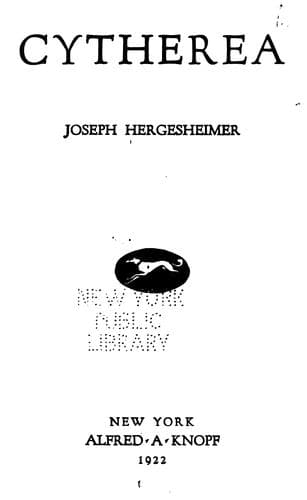
Adultery -- Fiction; Cuba -- Fiction; Runaway husbands -- Fiction
“I wonder?” They were in their room, preparing for bed; Fanny, with
her hair spread in a thin brown tide over the chaste shoulders of her
nightgown, was incredibly like a girl. The mechanical sweep of her hand
with a brush kept a brief sleeve falling back from the thinness of her
arm. How delicately methodical she was--an indispensable quality in
the repeated trying contacts, the lost privacy, of marriage. So much
depended upon the very elusiveness which the security of possession,
habit, destroyed.
“This love,” he continued his speculations aloud, “isn't at all
understood--we are ignorant about it in spite of endless experience and
reports and poetry. Take us,” he had one of his dangerous impulses of
complete honesty, “before we were married, while we were engaged, we
had an impracticable romantic attraction for each other. I know that
I thought of you all the time, day and night; and, just because you
existed, the whole world was full of prismatic colors; it was as though
an orchestra were playing continually and I were floating on the finest
music. You were like a figure in heaven that drew me up to you.
“Well, that lasted quite a while into our marriage; at first I had
an even greater emotion. Then, as Helena and Gregory were born, it
changed.” Midway in the brushing of her hair Fanny was motionless
and intent. “I don't say it decreased, Fanny, that it lost any of its
importance; but it did change; and in you as well as me. It wasn't
as prismatic, as musical, and there's no use contradicting me. I can
explain it best for myself by saying that my feeling for you became
largely tenderness.”
“Oh!” Fanny exclaimed, in a little lifting gasp; “oh, and that
tenderness,” her cheeks were bright with sudden color, “why, it is no
more than pity.”
“That isn't just,” he replied; “unless you want to speak of pity at its
very best. No, that won't do: my affection for you is made of all our
experiences, our lives and emotions, together. We are tied by a thousand
strings--common disappointments and joy and sickness and hope and pain
and heaven knows what else. We're held by habit, too, and convenience
and the opinion of society. Certainly it is no smaller than the first,”
he argued, but more to himself than to Fanny; “that was nothing but a
state of mind, of spirit; you can't live on music.”
“Don't you think you have said enough for one night?” she asked, in
a calm voice belied by the angry sparkle of her eyes, the faint
irrepressible trembling of her lips. “Do you think I want to hear that
it is only convention and our neighbors that keep you with me? You have
no right to insist that your horridness is true of me, either. I--I
could hear music, if you would let me.” She sank on the little cushioned
bench before her dressing table, where her youthfulness took on a
piercing aspect of misery. Fanny's declaration, not far from tears,
that she was just as she had always been was admirably upheld by her
appealing presence.
Public-domain text, read in full here on John Shaqi.
Reviews
Reviews
No reviews yet
Be the first to share your thoughts on this work.
Join the Discussion
Join the discussion
Sign in to leave a comment or review.
Sign InorCreate an account