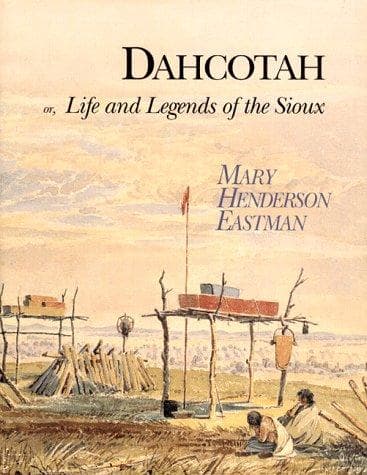
Dahcotah: Life and Legends of the Sioux Around Fort SnellingEastman, Mary H. (Mary Henderson)
History
Dahcotah: Life and Legends of the Sioux Around Fort Snelling
Eastman, Mary H. (Mary Henderson)
Dakota Indians -- Folklore; Dakota Indians -- History; Dakota Indians -- Social life and customs
As a great motive to improve the moral character of the Indians, I
present the condition of the women in their tribes. A degraded state of
woman is universally characteristic of savage life, as her elevated
influence in civilized society is the conspicuous standard of moral and
social virtue. The peculiar sorrows of the Sioux woman commence at her
birth. Even as a child she is despised, in comparison with the brother
beside her, who is one day to be a great warrior. As a maiden, she is
valued while the young man, who wants her for a wife, may have a doubt
of his success. But when she is a wife, there is little sympathy for her
condition. How soon do the oppressive storms and contentions of life
root out all that is kind or gentle in her heart. She must bear the
burdens of the family. Should her husband wish it, she must travel all
day with a heavy weight on her back; and at night when they stop, her
hands must prepare the food for her family before she retires to rest.
Her work is never done. She makes the summer and the winter house. For
the former she peels the bark from the trees in the spring; for the
latter she sews the deer-skin together. She tans the skins of which
coats, mocassins, and leggins are to be made for the family; she has to
scrape it and prepare it while other cares are pressing upon her. When
her child is born, she has no opportunities for rest or quiet. She must
paddle the canoe for her husband--pain and feebleness must be forgotten.
She is always hospitable. Visit her in her teepee, and she willingly
gives you what you need, if in her power; and with alacrity does what
she can to promote your comfort. In her looks there is little that is
attractive. Time has not caused the wrinkles in her forehead, nor the
furrows in her cheek. They are the traces of want, passion, sorrows and
tears. Her bent form was once light and graceful. Labor and privations
are not preservative of beauty.
Let it not be deemed impertinent if I venture to urge upon those who
care for the wretched wherever their lot may be cast, the immense good
that might be accomplished among these tribes by schools, which should
open the minds of the young to the light of reason and Christianity.
Even if the elder members are given up as hopeless, with the young
there is always encouragement. Many a bright little creature among the
Dahcotahs is as capable of receiving instruction as are the children of
civilization. Why should they be neglected when the waters of
benevolence are moving all around them?
Public-domain text, read in full here on John Shaqi.
Reviews
Reviews
No reviews yet
Be the first to share your thoughts on this work.
Join the Discussion
Join the discussion
Sign in to leave a comment or review.
Sign InorCreate an account