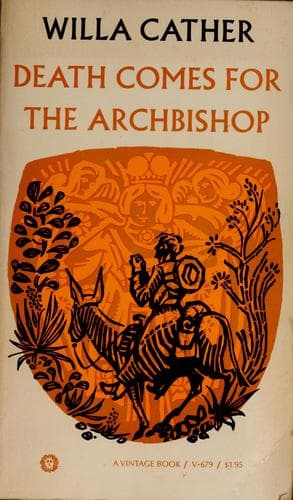
Christian fiction; Clergy -- Fiction; Historical fiction; New Mexico -- Fiction
SOME time in the very early years of seventeen hundred, nearly fifty
years after the great Indian uprising in which all the missionaries and
all the Spaniards in northern New Mexico were either driven out or
murdered, after the country had been reconquered and new missionaries
had come to take the place of the martyrs, a certain Friar Baltazar
Montoya was priest at Ácoma. He was of a tyrannical and overbearing
disposition and bore a hard hand on the natives. All the missions now in
ruins were active then, each had its resident priest, who lived for the
people or upon the people, according to his nature. Friar Baltazar was
one of the most ambitious and exacting. It was his belief that the
pueblo of Ácoma existed chiefly to support its fine church, and that
this should be the pride of the Indians as it was his. He took the best
of their corn and beans and squashes for his table, and selected the
choicest portions when they slaughtered a sheep, chose their best hides
to carpet his dwelling. Moreover, he exacted a heavy tribute in labour.
He was never done with having earth carried up from the plain in
baskets. He enlarged the churchyard and made the deep garden in the
cloister, enriching it with dung from the corrals. Here he was able to
grow a wonderful garden, since it was watered every evening by
women,--and this despite the fact that it was not proper that a woman
should ever enter the cloister at all. Each woman owed the Padre so many
_ollas_ of water a week from the cisterns, and they murmured not only
because of the labour, but because of the drain on their water-supply.
Baltazar was not a lazy man, and in his first years there, before he
became stout, he made long journeys in behalf of his mission and his
garden. He went as far as Oraibi, many days' journey, to select their
best peach seeds. (The peach orchards of Oraibi were very old, having
been cultivated since the days of the earliest Spanish expeditions, when
Coronado's captains gave the Moquis peach seeds brought from Spain.) His
grape cuttings were brought from Sonora in baskets on muleback, and he
would go all the way to the Villa (Santa Fé) for choice garden seeds,
at the season when pack trains came up the Rio Grande valley. The early
churchmen did a great business in carrying seeds about, though the
Indians and Mexicans were satisfied with beans and squashes and chili,
asking nothing more.
Public-domain text, read in full here on John Shaqi.
Reviews
Reviews
No reviews yet
Be the first to share your thoughts on this work.
Join the Discussion
Join the discussion
Sign in to leave a comment or review.
Sign InorCreate an account