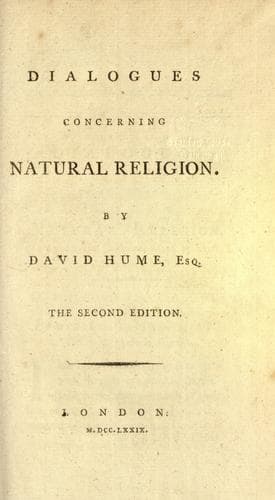
Natural theology -- Early works to 1800; Religion -- Early works to 1800
Is there any maxim in politics more certain and infallible, than that
both the number and authority of priests should be confined within very
narrow limits; and that the civil magistrate ought, for ever, to keep his
fasces and axes from such dangerous hands? But if the spirit of popular
religion were so salutary to society, a contrary maxim ought to prevail.
The greater number of priests, and their greater authority and riches,
will always augment the religious spirit. And though the priests have the
guidance of this spirit, why may we not expect a superior sanctity of
life, and greater benevolence and moderation, from persons who are set
apart for religion, who are continually inculcating it upon others, and
who must themselves imbibe a greater share of it? Whence comes it then,
that, in fact, the utmost a wise magistrate can propose with regard to
popular religions, is, as far as possible, to make a saving game of it,
and to prevent their pernicious consequences with regard to society?
Every expedient which he tries for so humble a purpose is surrounded with
inconveniences. If he admits only one religion among his subjects, he
must sacrifice, to an uncertain prospect of tranquillity, every
consideration of public liberty, science, reason, industry, and even his
own independency. If he gives indulgence to several sects, which is the
wiser maxim, he must preserve a very philosophical indifference to all of
them, and carefully restrain the pretensions of the prevailing sect;
otherwise he can expect nothing but endless disputes, quarrels, factions,
persecutions, and civil commotions.
True religion, I allow, has no such pernicious consequences: but we must
treat of religion, as it has commonly been found in the world; nor have I
any thing to do with that speculative tenet of Theism, which, as it is a
species of philosophy, must partake of the beneficial influence of that
principle, and at the same time must lie under a like inconvenience, of
being always confined to very few persons.
Public-domain text, read in full here on John Shaqi.
Reviews
Reviews
No reviews yet
Be the first to share your thoughts on this work.
Elsewhere in the archive
Join the Discussion
Join the discussion
Sign in to leave a comment or review.
Sign InorCreate an account