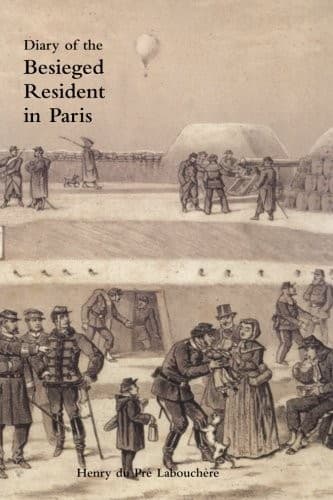
Diary of the Besieged Resident in ParisLabouchere, Henry Du Pré
History
Diary of the Besieged Resident in Paris
Labouchere, Henry Du Pré
Franco-Prussian War, 1870-1871; Paris (France) -- History -- Siege, 1870-1871 -- Personal narratives
The elections on Saturday, says M. Jules Favre, will be a "negation of
the Commune." By this I presume he means that the elected Mayors and
their adjuncts will only exercise power in their respective
arrondissements, but that their collective action will not be
recognised. As, however, they will be the only legally elected body in
Paris, and as, undoubtedly, they will frequently meet together, it is
very probable that they will be able to hold their own against the
Government. The word "Commune" is taken from the vocabulary of the first
Revolution. During the Reign of Terror the Municipality was all
powerful, and it styled itself a "Commune." By "Commune," consequently,
is simply meant a municipality which is strong enough to absorb tacitly
a portion of the power legally belonging to the Executive.
The Government now meets at one or other of the ministries. At the
Hotel de Ville Etienne Arago still reigns. Being a member of the
Government himself, he cannot well be turned out by his own colleagues,
but they distrust him, and do not clearly know whether he is with them
or against them. Yesterday, several battalions were stationed round the
hotel. Arago came out to review them. He was badly received, and the
officers let him understand that they were not there to be reviewed by
him. Soon afterwards General Tamisier passed along the line, and was
greeted with shouts of "A bas la Commune!"
I am sorry for Trochu; he is a good, honourable, high-minded man;
somewhat obstinate, and somewhat vain; but actuated by the best
intentions. He has thrust himself into a hornet's nest. In vain he now
plaintively complains that he has made Paris impregnable, that he cannot
make sorties without field artillery, and that he is neither responsible
for the capitulation of Metz, nor the rout the other day at Bourget.
What, then, say his opponents with some truth, was your wonderful plan?
Why did you put your name to proclamations which called upon us, if we
could not conquer, at least to die? Why did you imprison as calumniators
those who published news from the provinces, which you now admit is
true? It is by no means easy for him or his colleagues to reply to these
questions.
Public-domain text, read in full here on John Shaqi.
Reviews
Reviews
No reviews yet
Be the first to share your thoughts on this work.
Elsewhere in the archive
Join the Discussion
Join the discussion
Sign in to leave a comment or review.
Sign InorCreate an account