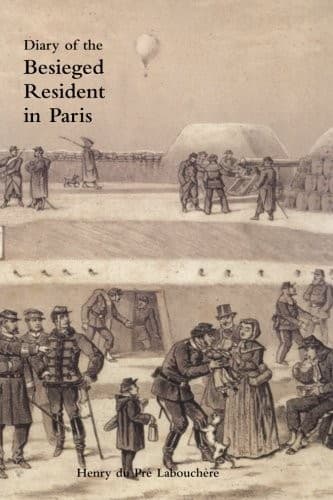
Diary of the Besieged Resident in ParisLabouchere, Henry Du Pré
History
Diary of the Besieged Resident in Paris
Labouchere, Henry Du Pré
Franco-Prussian War, 1870-1871; Paris (France) -- History -- Siege, 1870-1871 -- Personal narratives
Mr. Washburne received yesterday a despatch from his Government--the
first which has reached him since the commencement of the
siege--informing him that his conduct in remaining at Paris is approved
of. With the despatch there came English newspapers up to the 3rd.
Extracts from them will, I presume, be published to-morrow. I passed the
afternoon greedily devouring the news at the American Legation. It was a
curious sight--the Chancellerie was crowded with people engaged in the
same occupation. There were several French journalists, opening their
eyes very wide, under the impression that this would enable them to
understand English. A Secretary of Legation was sitting at a table
giving audiences to unnumbered ladies who wished to know how they could
leave Paris; or, if this was impossible, how they could draw on their
bankers in New York. Mr. Washburne walked about cheerily shaking
everyone by the hand, and telling them to make themselves at home. How
different American diplomatists are to the prim old women who represent
us abroad, with a staff of half-a-dozen dandies helping each other to do
nothing, who have been taught to regard all who are not of the craft as
their natural enemies. At the English Embassy Colonel Claremont and a
porter now represent the British nation. The former, in obedience to
orders from the Foreign Office, is only waiting for a reply from Count
Bismarck to his letter asking for a pass to leave us. Whether the
numerous English who remain here are then to look to Mr. Washburne or to
the porter for protection, I have been unable to discover.
M. Felix Pyat has been let out of prison. He says that he rather prefers
being there than at liberty, for in his cell he can "forget that he is
in a town inhabited by cowards," and devote himself to the works of M.
Louis Blanc, which he calls the "Bibles of democracy."
Public-domain text, read in full here on John Shaqi.
Reviews
Reviews
No reviews yet
Be the first to share your thoughts on this work.
Elsewhere in the archive
Join the Discussion
Join the discussion
Sign in to leave a comment or review.
Sign InorCreate an account