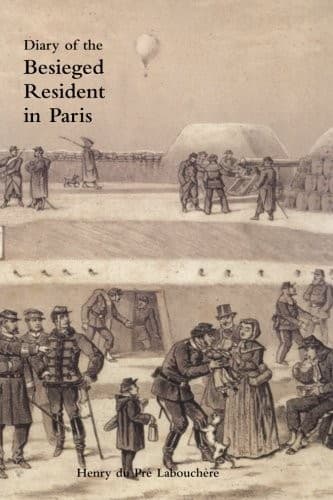
Diary of the Besieged Resident in ParisLabouchere, Henry Du Pré
History
Diary of the Besieged Resident in Paris
Labouchere, Henry Du Pré
Franco-Prussian War, 1870-1871; Paris (France) -- History -- Siege, 1870-1871 -- Personal narratives
night there are disputes, which often degenerate into fights, and then
in the morning, when explanations take place, these very explanations
are an excuse for recommencing drinking. Rules, indeed, are not wanting
to abate all this, but the misfortune is that they are never executed.
The indiscipline of the National Guard contrasts strangely with the
patriotism of their words. Most of the insubordination may be ascribed
to drunkenness, but the _mauvaise tenue_ which is so apparent in too
many battalions is due also to many other causes. The primary
organisation of the National Guard was ill-conceived and ill-executed,
and when the enrolments had been made, and the battalions formed, day
after day a fresh series of orders were promulgated, so diffuse, so
obscure, and so contradictory, that the officers, despairing to make
head or tail of them, gave up any attempt to enforce them."
The attempt at the last hour to form marching battalions out of these
citizen soldiers, by obliging each sedentary battalion to furnish 150
men, has not been a very successful one. The marching battalions, it is
true, have been formed, but they have not yet been engaged with the
enemy; and it certainly is the opinion of military men that it will be
advisable, for the credit of French arms, to "keep them in reserve"
during any future engagement which may take place. General Clement
Thomas has issued a series of general orders, from the tenor of which it
would appear that the system of substitutes has been largely practised
in these battalions. I have myself no doubt of the fact. The fault,
however, lies with the Government. When these battalions were formed,
the respective categories of unmarried and married men between 25 and
35, and between 35 and 45, were only to be drawn upon in case a
sufficient number of volunteers were not forthcoming. It became,
consequently, the interest of the men in these categories to encourage
volunteering, and this was done on a large and liberal scale. The
Government, if it wanted men, should have called to arms all between 25
and 35, and have allowed no exemptions. These new levies should have
been subjected to the same discipline as the Line and the Mobiles. It
must now accept the consequences of not having ventured to take this
step. For all operations beyond the enceinte General Trochu's force
consists of the Line and the Mobiles. All that he can expect from the
Parisians is a "moral support."
_December 9th._
Public-domain text, read in full here on John Shaqi.
Reviews
Reviews
No reviews yet
Be the first to share your thoughts on this work.
Elsewhere in the archive
Join the Discussion
Join the discussion
Sign in to leave a comment or review.
Sign InorCreate an account