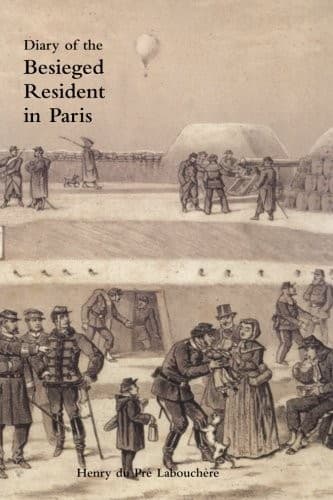
Diary of the Besieged Resident in ParisLabouchere, Henry Du Pré
History
Diary of the Besieged Resident in Paris
Labouchere, Henry Du Pré
Franco-Prussian War, 1870-1871; Paris (France) -- History -- Siege, 1870-1871 -- Personal narratives
_Verite_ is by far the best which has been published:--
"Notwithstanding that the fire of the enemy slackened on the 26th, the
Prussians were not losing their time. Thanks to the hardness of the
soil, and to the fog, they had got their guns into position in all their
batteries from Villenomble to Montfermeil. The injury done to the park
of Drancy by the precision of the aim of our artillery at Fort Nogent
was repaired; cannon were brought to the trenches which the day before
we had occupied at Ville Evrart; and, as well as it was possible, twelve
new batteries, armed with cannon of long range, were unmasked. All
through the 28th the fire continued; shells fell thickly on our
batteries, and in the village of Rosny. The roof of the station was
knocked in, and several Mobiles were killed in the main street. The
evacuation of the church, which had been converted into an ambulance,
was thought advisable. All this, however, was nothing in comparison with
the fire which was poured in during the night. The plateau of Avron was
literally inundated with shells, many of them of far larger size than
had previously been fired. The range of the guns was too great, and it
was evident that the Prussians had rectified their aim. Their
projectiles no longer fell wide in the field; they almost all burst
close to the trenches. Two guns in battery No. 2 were struck; the same
thing soon occurred in battery No. 3. Every moment the wheels of some
ammunition waggon were struck, or one of the horses killed. Several men
were wounded in the trenches, which were so shallow as to afford little
protection. Two shells bursting at the same moment killed a naval
officer and three men at one of the guns. All who were so imprudent as
to venture to attempt to cross the plateau were struck down. It was a
sad and terrible spectacle to see these sailors coolly endeavouring to
point their guns, undisturbed by the rain of fire; while their officers,
who were encouraging them, were falling every moment, covering those
round them with their blood. The infantry and the Mobiles were, too,
without shelter; for the Krupp guns swept the portion of the plateau on
which they were drawn up within supporting distance. Most of them made
the best of it, and laughed when they heard the shells whistling above
their heads and bursting near them. Many, however, were so terrified,
that they fell back, and spread abroad in their rear disquieting
reports, which the terrified air of the narrators rendered still more
alarming. The National Guard were drawn up on the heights in advance of
the village of Rosny; a few shells reached their ranks. An officer and a
soldier of the 114th were slightly wounded; but they remained firm.
Every hour the Prussian cannonade became heavier. On our side our fire
slackened; then ceased entirely. An _estafette_ came with an order to
evacuate the plateau, and to save the artillery. No time was lost.
Fortunately, at this moment the enemy's fire also slackened; and the
Public-domain text, read in full here on John Shaqi.
Reviews
Reviews
No reviews yet
Be the first to share your thoughts on this work.
Elsewhere in the archive
Join the Discussion
Join the discussion
Sign in to leave a comment or review.
Sign InorCreate an account