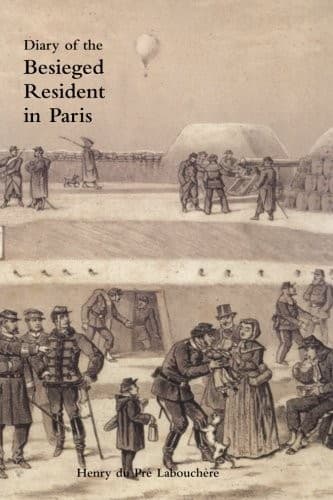
Diary of the Besieged Resident in ParisLabouchere, Henry Du Pré
History
Diary of the Besieged Resident in Paris
Labouchere, Henry Du Pré
Franco-Prussian War, 1870-1871; Paris (France) -- History -- Siege, 1870-1871 -- Personal narratives
This, in an aesthetical point of
view, is selfish; but it is none the less true. _Chacun pour soi._ The
Pantheon was struck yesterday. What desecration! everyone cries; and I
am very sorry for the Pantheon, but very glad that it was the Pantheon,
and not me. The world at large very likely would lose more by the
destruction of the Pantheon than of any particular individual; but each
particular individual prefers his own humble self to all the edifices
that architects have raised on the face of the globe.
I have been endeavouring to discover, whether in the councils of our
rulers, the question as to what is to be done in the possible
contingency of a capitulation becoming necessary, has been raised. As
far as I can hear, the contingency is not yet officially recognised as
within the realms of possibility, and it has never been alluded to.
General Trochu has officially announced "that the Governor of Paris will
never capitulate." His colleagues have periodically said much the same
thing. The most practical of them, M. Ernest Picard, has, I believe,
once or twice endeavoured to lead up to the subject, but he has failed
in the attempt. Newspaper articles and Government proclamations tell the
population every day that they only have to persevere in order
ultimately to triumph. If the end must come, it is difficult to see how
it will come. I have asked many intelligent persons what they think will
happen, but no one seems to have a very distinct notion respecting it.
Some think the Government will issue some day a notice to say that there
are only provisions for a week longer; and that at the end of this time
the gates of the city will be opened, and the Prussians told that, if
they insist upon entering, there will be nothing to prevent them. Others
think that the Government will resign their power into the hands of the
mayors, as the direct representatives of Paris. Trochu rides about a
good deal outside, and says to the soldiers, "Courage, my children, the
moment is coming." But to what moment he alludes no one is aware. No
word is more abused in the French language than "sublime." To call a
folly a sublime folly is considered a justification of any species of
absurdity. We call this refusal to anticipate a contingency which
certainly is possible, if not probable, sublime. We are proud of it, and
sleep on in our fool's paradise as though it were to last for ever.
CHAPTER XVII.
_January 17th._
The papers publish reports of the meetings of the clubs. The following
is from the _Debats_ of to-day:--
Public-domain text, read in full here on John Shaqi.
Reviews
Reviews
No reviews yet
Be the first to share your thoughts on this work.
Elsewhere in the archive
Join the Discussion
Join the discussion
Sign in to leave a comment or review.
Sign InorCreate an account