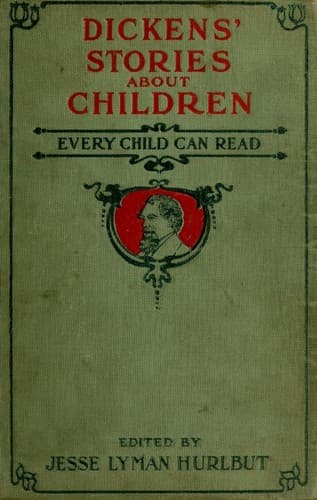
Dickens' Stories About Children Every Child Can ReadDickens, Charles
General
Dickens' Stories About Children Every Child Can Read
Dickens, Charles
Children -- Juvenile fiction; Children's stories, English
THE house where little Nell and her grandfather lived was one of those
places where old and curious things were kept, one of those old houses
which seem to crouch in odd corners of the town, and to hide their musty
treasures from the public eye in jealousy and distrust. There were suits
of mail standing like ghosts in armor, here and there; curious carvings
brought from monkish cloisters; rusty weapons of various kinds;
distorted figures in china, and wood, and iron, and ivory; tapestry, and
strange furniture that might have been designed in dreams; and in the
old, dark, dismal rooms there lived alone together the man and a
child--his grandchild, Little Nell. Solitary and dull as was her life,
the innocent and cheerful spirit of the child found happiness in all
things, and through the dim rooms of the old curiosity shop Little Nell
went singing, moving with gay and lightsome step.
[Illustration: Little Nell and Her Grandfather.
Page 86]
But gradually over the old man, whom she so tenderly loved, there stole
a sad change. He became thoughtful, sad and wretched. He had no sleep
or rest but that which he took by day in his easy-chair; for every
night, and all night long, he was away from home. To the child it seemed
that her grandfather's love for her increased, even with the hidden
grief by which she saw him struck down. And to see him sorrowful, and
not to know the cause of his sorrow; to see him growing pale and weak
under his trouble of mind, so weighed upon her gentle spirit that at
times she felt as though her heart must break.
At last the time came when the old man's feeble frame could bear up no
longer against his hidden care. A raging fever seized him, and, as he
lay delirious or insensible through many weeks, Nell learned that the
house which sheltered them was theirs no longer; that in the future they
would be very poor; that they would scarcely have bread to eat. At
length the old man began to mend, but his mind was weakened.
He would sit for hours together, with Nell's small hand in his, playing
with the fingers, and sometimes stopping to smooth her hair or kiss her
brow; and when he saw that tears were glistening in her eyes he would
look amazed. As the time drew near when they must leave the house, he
made no reference to the necessity of finding other shelter. An
indistinct idea he had that the child was desolate and in need of help;
though he seemed unable to understand their real position more
distinctly. But a change came upon him one evening, as he and Nell sat
silently together.
"Let us speak softly, Nell," he said. "Hush! for if they knew our
purpose they would say that I was mad, and take thee from me. We will
not stop here another day. We will travel afoot through the fields and
woods, and trust ourselves to God in the places where He dwells.
To-morrow morning, dear, we'll turn our faces from this scene of sorrow,
and be as free and happy as the birds."
Public-domain text, read in full here on John Shaqi.
Reviews
Reviews
No reviews yet
Be the first to share your thoughts on this work.
Join the Discussion
Join the discussion
Sign in to leave a comment or review.
Sign InorCreate an account