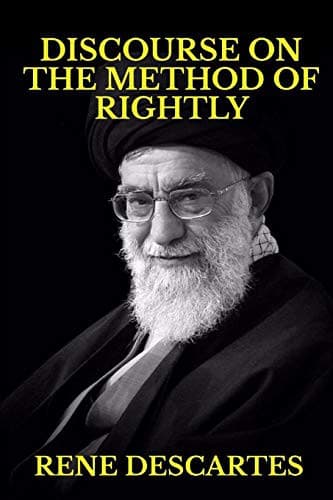
Discourse on the Method of Rightly Conducting One's Reason and of Seeking Truth in the SciencesDescartes, René
PhilosophyPhilosophy
Discourse on the Method of Rightly Conducting One's Reason and of Seeking Truth in the Sciences
Descartes, René
Methodology; Science -- Methodology
In fine, to conclude this code of morals, I thought of reviewing the
different occupations of men in this life, with the view of making
choice of the best. And, without wishing to offer any remarks on the
employments of others, I may state that it was my conviction that I
could not do better than continue in that in which I was engaged, viz.,
in devoting my whole life to the culture of my reason, and in making
the greatest progress I was able in the knowledge of truth, on the
principles of the method which I had prescribed to myself. This method,
from the time I had begun to apply it, had been to me the source of
satisfaction so intense as to lead me to, believe that more perfect or
more innocent could not be enjoyed in this life; and as by its means I
daily discovered truths that appeared to me of some importance, and of
which other men were generally ignorant, the gratification thence
arising so occupied my mind that I was wholly indifferent to every
other object. Besides, the three preceding maxims were founded singly
on the design of continuing the work of self-instruction. For since God
has endowed each of us with some light of reason by which to
distinguish truth from error, I could not have believed that I ought
for a single moment to rest satisfied with the opinions of another,
unless I had resolved to exercise my own judgment in examining these
whenever I should be duly qualified for the task. Nor could I have
proceeded on such opinions without scruple, had I supposed that I
should thereby forfeit any advantage for attaining still more accurate,
should such exist. And, in fine, I could not have restrained my
desires, nor remained satisfied had I not followed a path in which I
thought myself certain of attaining all the knowledge to the
acquisition of which I was competent, as well as the largest amount of
what is truly good which I could ever hope to secure Inasmuch as we
neither seek nor shun any object except in so far as our understanding
represents it as good or bad, all that is necessary to right action is
right judgment, and to the best action the most correct judgment, that
is, to the acquisition of all the virtues with all else that is truly
valuable and within our reach; and the assurance of such an acquisition
cannot fail to render us contented.
Public-domain text, read in full here on John Shaqi.
Reviews
Reviews
No reviews yet
Be the first to share your thoughts on this work.
Join the Discussion
Join the discussion
Sign in to leave a comment or review.
Sign InorCreate an account