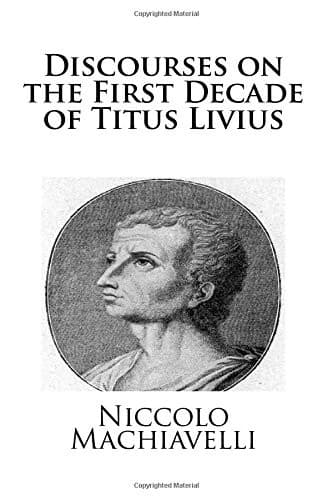
Discourses on the First Decade of Titus LiviusMachiavelli, Niccolò
Philosophy
Discourses on the First Decade of Titus Livius
Machiavelli, Niccolò
Livy. Ab urbe condita; Political science -- Early works to 1800; Rome -- Historiography
After Hieronymus, the Syracusan tyrant, was put to death, there being
at that time a great war between the Romans and the Carthaginians, the
citizens of Syracuse fell to disputing among themselves with which
nation they should take part; and so fierce grew the controversy
between the partisans of the two alliances, that no course could be
agreed on, and they took part with neither; until Apollonides, one of
the foremost of the Syracusan citizens, told them in a speech replete
with wisdom, that neither those who inclined to hold by the Romans, nor
those who chose rather to side with the Carthaginians, were deserving
of blame; but that what was utterly to be condemned was doubt and delay
in taking one side or other; for from such uncertainty he clearly
foresaw the ruin of their republic; whereas, by taking a decided
course, whatever it might be, some good might come. Now Titus Livius
could not show more clearly than he does in this passage, the mischief
which results from resting in suspense. He shows it, likewise, in the
case of the Lavinians, of whom he relates, that being urged by the
Latins to aid them against Rome, they were so long in making up their
minds, that when the army which they at last sent to succour the Latins
was issuing from their gates, word came that the Latins were defeated.
Whereupon Millionius, their prætor, said, “_With the Romans this short
march will cost us dear_.” But had the Lavinians resolved at once
either to grant aid or to refuse it, taking a latter course they would
not have given offence to the Romans, taking the former, and rendering
timely help, they and the Latins together might have had a victory. But
by delay they stood to lose in every way, as the event showed.
Public-domain text, read in full here on John Shaqi.
Reviews
Reviews
No reviews yet
Be the first to share your thoughts on this work.
Elsewhere in the archive
Join the Discussion
Join the discussion
Sign in to leave a comment or review.
Sign InorCreate an account