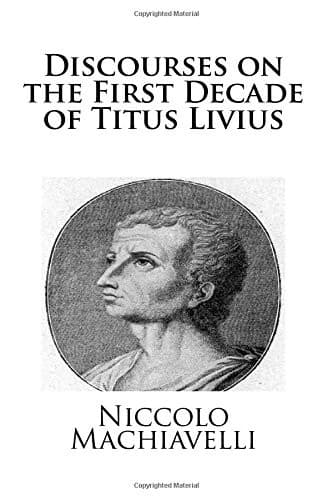
Discourses on the First Decade of Titus LiviusMachiavelli, Niccolò
Philosophy
Discourses on the First Decade of Titus Livius
Machiavelli, Niccolò
Livy. Ab urbe condita; Political science -- Early works to 1800; Rome -- Historiography
Manlius, therefore, was of those who by the severity of their commands
maintained the military discipline of Rome; urged thereto, in the first
place, by his natural temper, and next by the desire that whatever he
was minded to command should be done. Valerius, on the other hand,
could afford to act humanely, because for him it was enough if all were
done which in a Roman army it was customary to do. And, since the
customs of that army were good customs, they sufficed to gain him
honour, while at the same time their maintenance cost him no effort,
nor threw on him the burthen of punishing transgressors; as well
because there were none who trangressed, as because had there been any,
they would, as I have said, have imputed their punishment to the
ordinary rules of discipline, and not to the severity of their
commander. In this way Valerius had room to exercise that humane
disposition which enabled him at once to gain influence over his
soldiers and to content them. Hence it was that both these captains
obtaining the same obedience, could, while following different methods,
arrive at the same ends. Those, however, who seek to imitate them may
chance to fall into the errors of which I have already spoken, in
connection with Hannibal and Scipio, as breeding contempt or hatred,
and which are only to be corrected by the presence of extraordinary
valour, and not otherwise.
It rests now to determine which of these two methods is the more to be
commended. This, I take it, is matter of dispute, since both methods
have their advocates. Those writers, however, who have laid down rules
for the conduct of princes, describe a character approaching more
nearly to that of Valerius than to that of Manlius; and Xenophon, whom
I have already cited, while giving many instances of the humanity of
Cyrus, conforms closely to what Livius tells us of Valerius. For
Valerius being made consul against the Samnites, on the eve of battle
spoke to his men with the same kindliness with which he always treated
them; and Livius, after telling us what he said, remarks of him:
“_Never was there a leader more familiar with his men; cheerfully
sharing with the meanest among them every hardship and fatigue. Even in
the military games, wherein those of the same rank were wont to make
trial of their strength or swiftness, he would good-naturedly take a
part, nor disdain any adversary who offered; meeting victory or defeat
with an unruffled temper and an unchanged countenance. When called on
to act, his bounty and generosity never fell short. When he had to
speak, he was as mindful of the feelings of others as of his own
dignity. And, what more than anything else secures the popular favour,
he maintained when exercising his magistracies the same bearing he had
worn in seeking them._”
Public-domain text, read in full here on John Shaqi.
Reviews
Reviews
No reviews yet
Be the first to share your thoughts on this work.
Elsewhere in the archive
Join the Discussion
Join the discussion
Sign in to leave a comment or review.
Sign InorCreate an account