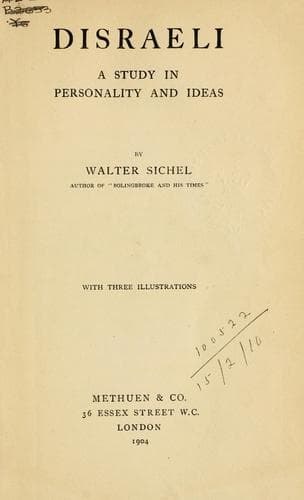
Disraeli: A Study in Personality and IdeasSichel, Walter
History
Disraeli: A Study in Personality and Ideas
Sichel, Walter
Disraeli, Benjamin, 1804-1881
superstition and from a want of sympathy with the highest aspirations
of humanity, are deceived. What our duty is at this critical moment is
to maintain the Empire of England;” and before the Congress, he again
solemnly pointed out that worse, more widespread, and far more lasting
agonies would be caused to myriads abroad if the misguided excitement
of several sections at home were to prevail, than even by any horrors
which must move both indignation and sympathy in every heart.
Into the detailed controversies of the “Bulgarian atrocities” agitation
I will not here enter. It is now generally confessed that Disraeli was
right not to be led away by the sensational exaggerations manufactured
for Russian purposes abroad, and retailed, sometimes, for political
purposes at home. Horrible savageries, of course, happened on both
sides in such a war, and those horrors, from the nature of their
theatre, were Oriental. But that they were bound up with racial feuds,
and were in full evidence on the other side, was vouched for to me--and
in great detail--some ten years after their occurrence, by Sir William
White, then Ambassador at Constantinople, and by the then consul,
himself a leading member of the committee for their investigation.
These authorities went much further in their declarations than ever
Disraeli did, with his extreme reticence in public. Indeed, they
told me that the whole source of the war had been engineered by the
acute irritations of Russian diplomacy, which, as Lord Derby long ago
expressed it, “has never proceeded by storm, but by sap and mine.”
Public-domain text, read in full here on John Shaqi.
Reviews
Reviews
No reviews yet
Be the first to share your thoughts on this work.
Elsewhere in the archive
Join the Discussion
Join the discussion
Sign in to leave a comment or review.
Sign InorCreate an account