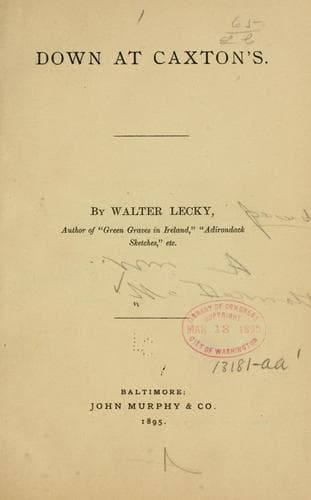
American literature -- 19th century -- History and criticism; American literature -- Catholic authors -- History and criticism
been brought up in factories, household restraint frets their soul. Of
household economy, so necessary to the city toiler, they know nothing.
If ends meet it is well. If not, there is trust and sorrow. The day
of their marriage means a few stuffy rooms, badly ventilated, filled
with the most bizarre and useless furniture put in by shylock, who
will, in the coming years, exact ten times their value. Thus started,
children are born, puny and sickly, prey of physician and druggist.
If these children survive, at an early age they follow the father and
mother by entering foundries and factories to toil life’s weary round
away. When they die the family is pauperized for years. It is a common
plaint of the tenements that “I would have been worth something if my
boy had not died.” Every death is not only a drain on the immediate
family, but on their friends, who are supposed to turn out and give
“the corpse a decent burial.” The decent burial means coaches, flowers
and whiskey. The most casual observer must notice the giant part liquor
plays, in the lives of the poor. Liquor and its concomitant, tobacco,
in the deadly form of cigarettes, are known to the boy. He has been
brought up in that atmosphere. His father has his cheap, ill-smelling
cigar and frothy pint for supper. His mother and a few gossiping
friends have chased the heavy day with a few pints “because they were
dry.” He delights in being the Mercury of the “growler.” Hanging by
the balustrade he sips the beer, “just to taste it.” That taste, alas,
lingers through life. As he grows older it becomes more refined. His
teachers are the sumptuous, dazzling bar-rooms guarding each city
corner, while betraying the nation. The owners of these vice palaces
are wise in their generation. For his stuffy home, broken furniture and
cheerless aspects, they show him wide, airy rooms, polished furniture,
bevelled glass mirrors, dazzling light, music, gaiety, companionship,
and the illusive charm of revelry. The reading matter in such places is
on a par with the other attractions. It is sensational. Its authors are
skilled in the base development of the passions. It smacks obscenity,
and early dulls the intellect to finer things. To be enmeshed in its
threads is the greatest sorrow of a young life. When the bar-room
does not allure, there is another siren to be taken into account. It
is the promiscuous gathering at the neighbor’s house who has been so
unfortunate as to find a music dealer to trust him with a piano at
three times its price. Here gather the Romeos and Juliets to
“Sing and dance
And parley vous France,
Drink beer Alanna
And play on the grand piano.”
Public-domain text, read in full here on John Shaqi.
Reviews
Reviews
No reviews yet
Be the first to share your thoughts on this work.
Elsewhere in the archive
Join the Discussion
Join the discussion
Sign in to leave a comment or review.
Sign InorCreate an account