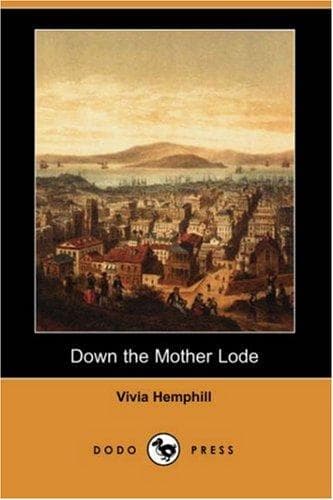
California -- Gold discoveries -- Fiction; Frontier and pioneer life -- California -- Fiction; Short stories, American
“Who was it that brought his mare into his own kitchen when it snowed,
and fed her the rice and beans he went without? Who was it that the
Widow Schmitt waits for year after year, with half the ould fools in
Placer dancin' after her?”
That was too much for old man Greeley.
“Because he was indifferent-like. When ye want a woman, run away
f-r-r-om her and she'll run after.”
“Why did ye na do it, then, Jeems?”
“Faith an' I did, but bein' ahl dressed up as I was in me coat, she
couldn't see me suspenders to tell was I comin' or goin'!” Jim Hutch
turned from him witheringly.
“Who was it staked ye for a new prospectin' trip, an' let his own mine
go unworked? Who nursed ye when ye were lyin' seeck unto death, an'
no one would come nigh on account of the smallpox scare? Old Charlie
Price.”
A boy whirled about to face the window, but not before one
uncontrollable sob had sounded through the quiet room.
“Who was it,” went on the old Scotchman gently, “found the wee bairn
that was lost, last summer; that followed the Indians for thirty miles
on his Leezie-mare and got the babe from out the wickiup of White
Beaver? Charlie Price.
“Who came bringing it haeme laughing, on the saddle pommel while he sang
to it songs from ower seven seas, which we did blush to hear, in a
voice to be heard twa miles about? And 'twas only the bairn's mother who
thought to thank him.
“Yea, and furthermore, when the incensed people would hae wipet out the
while tribe of White Beaver, who dashed at the mob wi' the roars of a
bull-bison forcin' them to hear that the squaw was crazed from the death
of her own bit bairn, and but tryin' to comfort her sore heart? Who, I'm
askin' ye?” and from each man's lips came the murmur like a response to
a litany:
“Charlie Price.”
From the open door a cool dawn breeze blew in from the Sierras, pure
forerunner to the new day. It whirled the heavy smoke plumes into forms
of vanished ghosts, like the tortured figments of each man's conscience
who had done, and “left undone” that which it was forever too late to
amend.
The sheriff walked in.
“This boy says that old Charlie is gone.” He stood with his broad hat
off, running his fingers nervously through his hair. “Gentlemen--I--I
must confess--I heard the poor man calling, but--”
“Mon, in an ancient book named 'Mr. Aesop, His Fables,' there was a tale
of the lad who cried 'wolf.' Many there are here who have read it. Come,
let us gae after poor Charlie.”
In the first daylight they reached the tree with its gruesome burden.
“But--but,” sputtered the keen-eyed little Irishman, “'Tis not Charlie
at all! 'Tis but an effigy dressed in Charlie's clothes and hung at the
Widow Schmitt's gate.”
“As a warnin' to him frae some mutton-head lover of hers.”
They ran as one man across the road to Charlie's cabin. It was empty.
“He was callin' 'Help',” said the round-eyed boy.
“Yes, we heard him,” added the sheriff.
They had come up the road. They started back down the trail.
* * * * *
Public-domain text, read in full here on John Shaqi.
Reviews
Reviews
No reviews yet
Be the first to share your thoughts on this work.
Join the Discussion
Join the discussion
Sign in to leave a comment or review.
Sign InorCreate an account