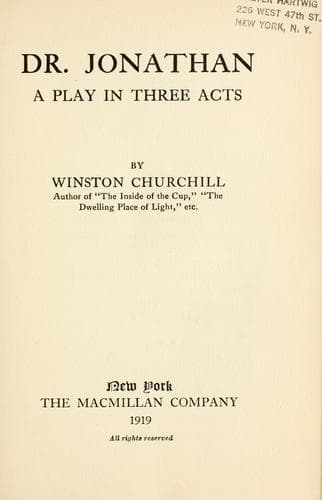
Mills and mill-work -- Management -- Drama; New England -- Drama; Veterans -- United States -- Drama; World War, 1914-1918 -- Drama
ASHER. George, I don't like to say anything just as you're going
to fight for your country, my boy, but your attitude of religious
skepticism has troubled me, as well as your habit of intimacy with the
shop hands. I confess to you that I've been a little afraid at times
that you'd take after Jonathan's father. He never went to church, he
forgot that he owed something to his position as a Pindar. He used to
have that house of his overrun with all sorts of people, and the yard
full of dirty children eating his fruit and picking his flowers. There's
such a thing as being too democratic. I hope I'm as good an American as
anybody, I believe that any man with brains, who has thrift, ought to
rise--but wait until they do rise. You're going to command men, and when
you come back here into the business again you'll be in a position of
authority. Remember what I say, if you give these working people an
inch, they'll take all you have.
GEORGE (laying his hand on ASHER's shoulder). Something is worrying you,
dad. We've always been pretty good pals, haven't we?
ASHER. Yes, ever since you were a little shaver. Well, George, I didn't
want to bother you with it--today. It seems there's trouble in the
shops,--in our shops, of all places,--it's been going on for some time,
grumbling, dissatisfaction, and they're getting higher wages than ever
before--ruinous wages. They want me to recognize the union.
GEORGE. Well, that beats me. I thought we were above the labour-trouble
line, away up here in New England.
ASHER (grimly). Oh, I can handle them.
GEORGE. I'll bet you can. You're a regular old war horse when you get
started. It's your capital, it's your business, you've put it all at the
disposal of the government. What right have they to kick up a row now,
with this war on? I must say I haven't any sympathy with that.
ASHER (proudly). I guess you're a real Pindar after all, George.
(Enter an elderly maid, lower right.)
MAID. Timothy Farrell, the foreman's here.
(Enter, lower right, TIMOTHY, a big Irishman of about sixty, in
working clothes.)
TIMOTHY. Here I am, sir. They're after sending word you wanted me.
GEORGE (going up to TIMOTHY and shaking his hand warmly). Old Timothy!
I'm glad to get sight of you before I go.
TIMOTHY. And it's glad I am to see you, Mr. George, before you leave.
And he an officer now! Sure, I mind him as a baby being wheeled up and
down under the trees out there. My boy Bert was saying only this morning
how we'd missed the sight of him in the shops this summer. You have a
way with the men, Mr. George, of getting into their hearts, like. I was
thinking just now, if Mr. George had only been home, in the shops, maybe
we wouldn't be having all this complaint and trouble.
GEORGE. Who's at the bottom of this, Timothy? Rench? Hillman? I thought
so. Well, they're not bad chaps when you get under their skins.
(He glances at his wrist watch)
Public-domain text, read in full here on John Shaqi.
Reviews
Reviews
No reviews yet
Be the first to share your thoughts on this work.
Join the Discussion
Join the discussion
Sign in to leave a comment or review.
Sign InorCreate an account