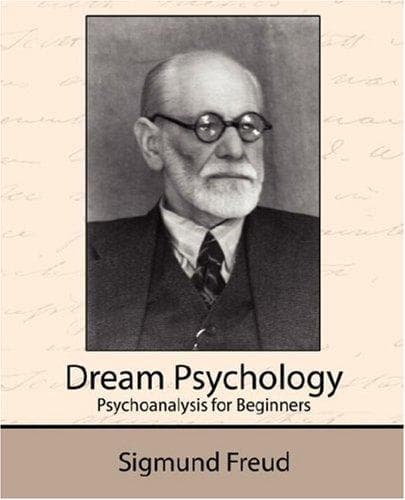
Dream Psychology: Psychoanalysis for BeginnersFreud, Sigmund
Science
Dream Psychology: Psychoanalysis for Beginners
Freud, Sigmund
Dreams; Psychoanalysis
The stream of thought is henceforth subjected to a series of
transformations which we no longer recognize as normal psychic processes
and which give us a surprising result, viz. a psychopathological
formation. Let us emphasize and group the same.
1. The intensities of the individual ideas become capable of discharge
in their entirety, and, proceeding from one conception to the other,
they thus form single presentations endowed with marked intensity.
Through the repeated recurrence of this process the intensity of an
entire train of ideas may ultimately be gathered in a single
presentation element. This is the principle of _compression or
condensation_. It is condensation that is mainly responsible for the
strange impression of the dream, for we know of nothing analogous to it
in the normal psychic life accessible to consciousness. We find here,
also, presentations which possess great psychic significance as
junctions or as end-results of whole chains of thought; but this
validity does not manifest itself in any character conspicuous enough
for internal perception; hence, what has been presented in it does not
become in any way more intensive. In the process of condensation the
entire psychic connection becomes transformed into the intensity of the
presentation content. It is the same as in a book where we space or
print in heavy type any word upon which particular stress is laid for
the understanding of the text. In speech the same word would be
pronounced loudly and deliberately and with emphasis. The first
comparison leads us at once to an example taken from the chapter on "The
Dream-Work" (trimethylamine in the dream of Irma's injection).
Historians of art call our attention to the fact that the most ancient
historical sculptures follow a similar principle in expressing the rank
of the persons represented by the size of the statue. The king is made
two or three times as large as his retinue or the vanquished enemy. A
piece of art, however, from the Roman period makes use of more subtle
means to accomplish the same purpose. The figure of the emperor is
placed in the center in a firmly erect posture; special care is bestowed
on the proper modelling of his figure; his enemies are seen cowering at
his feet; but he is no longer represented a giant among dwarfs. However,
the bowing of the subordinate to his superior in our own days is only an
echo of that ancient principle of representation.
The direction taken by the condensations of the dream is prescribed on
the one hand by the true foreconscious relations of the dream thoughts,
an the other hand by the attraction of the visual reminiscences in the
unconscious. The success of the condensation work produces those
intensities which are required for penetration into the perception
systems.
Public-domain text, read in full here on John Shaqi.
Reviews
Reviews
No reviews yet
Be the first to share your thoughts on this work.
Elsewhere in the archive
Join the Discussion
Join the discussion
Sign in to leave a comment or review.
Sign InorCreate an account