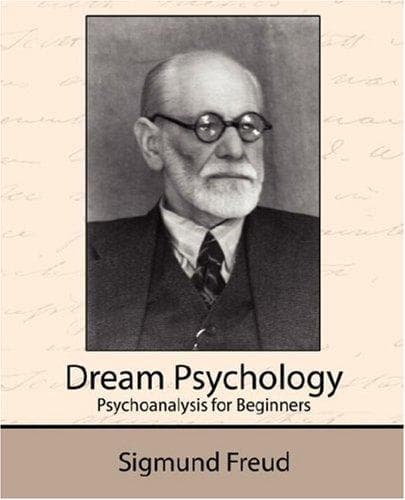
Dream Psychology: Psychoanalysis for BeginnersFreud, Sigmund
Science
Dream Psychology: Psychoanalysis for Beginners
Freud, Sigmund
Dreams; Psychoanalysis
2. Through this free transferability of the intensities, moreover, and
in the service of condensation, _intermediary
presentations_--compromises, as it were--are formed (_cf._ the numerous
examples). This, likewise, is something unheard of in the normal
presentation course, where it is above all a question of selection and
retention of the "proper" presentation element. On the other hand,
composite and compromise formations occur with extraordinary frequency
when we are trying to find the linguistic expression for foreconscious
thoughts; these are considered "slips of the tongue."
3. The presentations which transfer their intensities to one another are
_very loosely connected_, and are joined together by such forms of
association as are spurned in our serious thought and are utilized in
the production of the effect of wit only. Among these we particularly
find associations of the sound and consonance types.
4. Contradictory thoughts do not strive to eliminate one another, but
remain side by side. They often unite to produce condensation _as if no
contradiction_ existed, or they form compromises for which we should
never forgive our thoughts, but which we frequently approve of in our
actions.
These are some of the most conspicuous abnormal processes to which the
thoughts which have previously been rationally formed are subjected in
the course of the dream-work. As the main feature of these processes we
recognize the high importance attached to the fact of rendering the
occupation energy mobile and capable of discharge; the content and the
actual significance of the psychic elements, to which these energies
adhere, become a matter of secondary importance. One might possibly
think that the condensation and compromise formation is effected only in
the service of regression, when occasion arises for changing thoughts
into pictures. But the analysis and--still more distinctly--the
synthesis of dreams which lack regression toward pictures, _e.g._ the
dream "Autodidasker--Conversation with Court-Councilor N.," present the
same processes of displacement and condensation as the others.
Hence we cannot refuse to acknowledge that the two kinds of essentially
different psychic processes participate in the formation of the dream;
one forms perfectly correct dream thoughts which are equivalent to
normal thoughts, while the other treats these ideas in a highly
surprising and incorrect manner. The latter process we have already set
apart as the dream-work proper. What have we now to advance concerning
this latter psychic process?
Public-domain text, read in full here on John Shaqi.
Reviews
Reviews
No reviews yet
Be the first to share your thoughts on this work.
Elsewhere in the archive
Join the Discussion
Join the discussion
Sign in to leave a comment or review.
Sign InorCreate an account