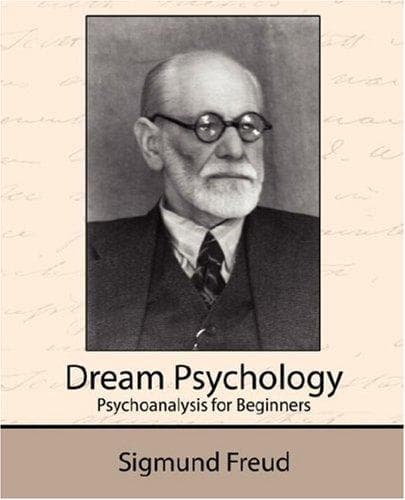
Dream Psychology: Psychoanalysis for BeginnersFreud, Sigmund
Science
Dream Psychology: Psychoanalysis for Beginners
Freud, Sigmund
Dreams; Psychoanalysis
We should be unable to answer this question here if we had not
penetrated considerably into the psychology of the neuroses and
especially of hysteria. From this we learn that the same incorrect
psychic processes--as well as others that have not been
enumerated--control the formation of hysterical symptoms. In hysteria,
too, we at once find a series of perfectly correct thoughts equivalent
to our conscious thoughts, of whose existence, however, in this form we
can learn nothing and which we can only subsequently reconstruct. If
they have forced their way anywhere to our perception, we discover from
the analysis of the symptom formed that these normal thoughts have been
subjected to abnormal treatment and _have been transformed into the
symptom by means of condensation and compromise formation, through
superficial associations, under cover of contradictions, and eventually
over the road of regression_. In view of the complete identity found
between the peculiarities of the dream-work and of the psychic activity
forming the psychoneurotic symptoms, we shall feel justified in
transferring to the dream the conclusions urged upon us by hysteria.
From the theory of hysteria we borrow the proposition that _such an
abnormal psychic elaboration of a normal train of thought takes place
only when the latter has been used for the transference of an
unconscious wish which dates from the infantile life and is in a state
of repression_. In accordance with this proposition we have construed
the theory of the dream on the assumption that the actuating dream-wish
invariably originates in the unconscious, which, as we ourselves have
admitted, cannot be universally demonstrated though it cannot be
refuted. But in order to explain the real meaning of the term
_repression_, which we have employed so freely, we shall be obliged to
make some further addition to our psychological construction.
Public-domain text, read in full here on John Shaqi.
Reviews
Reviews
No reviews yet
Be the first to share your thoughts on this work.
Elsewhere in the archive
Join the Discussion
Join the discussion
Sign in to leave a comment or review.
Sign InorCreate an account