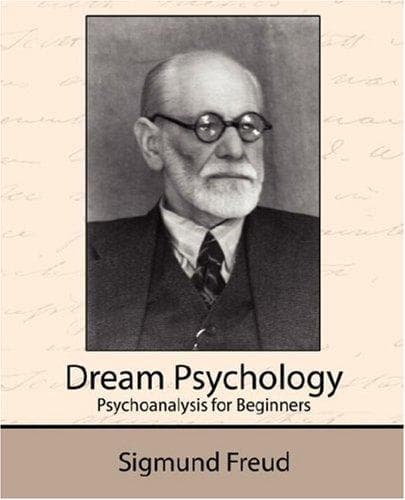
Dream Psychology: Psychoanalysis for BeginnersFreud, Sigmund
Science
Dream Psychology: Psychoanalysis for Beginners
Freud, Sigmund
Dreams; Psychoanalysis
The psychic process which is admitted by the first system only I shall
now call the _primary_ process; and the one resulting from the
inhibition of the second system I shall call the _secondary_ process. I
show by another point for what purpose the second system is obliged to
correct the primary process. The primary process strives for a discharge
of the excitement in order to establish a _perception_ identity with the
sum of excitement thus gathered; the secondary process has abandoned
this intention and undertaken instead the task of bringing about a
_thought identity_. All thinking is only a circuitous path from the
memory of gratification taken as an end-presentation to the identical
occupation of the same memory, which is again to be attained on the
track of the motor experiences. The state of thinking must take an
interest in the connecting paths between the presentations without
allowing itself to be misled by their intensities. But it is obvious
that condensations and intermediate or compromise formations occurring
in the presentations impede the attainment of this end-identity; by
substituting one idea for the other they deviate from the path which
otherwise would have been continued from the original idea. Such
processes are therefore carefully avoided in the secondary thinking. Nor
is it difficult to understand that the principle of pain also impedes
the progress of the mental stream in its pursuit of the thought
identity, though, indeed, it offers to the mental stream the most
important points of departure. Hence the tendency of the thinking
process must be to free itself more and more from exclusive adjustment
by the principle of pain, and through the working of the mind to
restrict the affective development to that minimum which is necessary as
a signal. This refinement of the activity must have been attained
through a recent over-occupation of energy brought about by
consciousness. But we are aware that this refinement is seldom
completely successful even in the most normal psychic life and that our
thoughts ever remain accessible to falsification through the
interference of the principle of pain.
This, however, is not the breach in the functional efficiency of our
psychic apparatus through which the thoughts forming the material of the
secondary mental work are enabled to make their way into the primary
psychic process--with which formula we may now describe the work leading
to the dream and to the hysterical symptoms. This case of insufficiency
results from the union of the two factors from the history of our
evolution; one of which belongs solely to the psychic apparatus and has
exerted a determining influence on the relation of the two systems,
while the other operates fluctuatingly and introduces motive forces of
organic origin into the psychic life. Both originate in the infantile
life and result from the transformation which our psychic and somatic
organism has undergone since the infantile period.
Public-domain text, read in full here on John Shaqi.
Reviews
Reviews
No reviews yet
Be the first to share your thoughts on this work.
Elsewhere in the archive
Join the Discussion
Join the discussion
Sign in to leave a comment or review.
Sign InorCreate an account