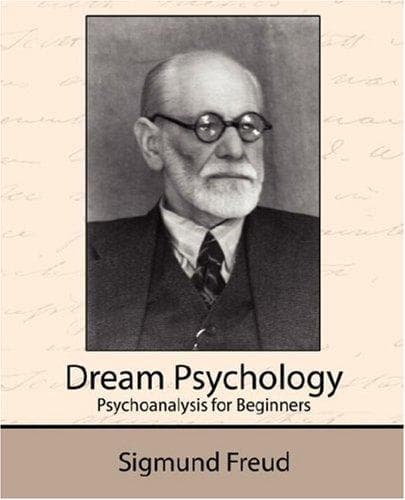
Dream Psychology: Psychoanalysis for BeginnersFreud, Sigmund
Science
Dream Psychology: Psychoanalysis for Beginners
Freud, Sigmund
Dreams; Psychoanalysis
The theory of the psychoneuroses asserts with complete certainty that
only sexual wish-feelings from the infantile life experience repression
(emotional transformation) during the developmental period of childhood.
These are capable of returning to activity at a later period of
development, and then have the faculty of being revived, either as a
consequence of the sexual constitution, which is really formed from the
original bisexuality, or in consequence of unfavorable influences of the
sexual life; and they thus supply the motive power for all
psychoneurotic symptom formations. It is only by the introduction of
these sexual forces that the gaps still demonstrable in the theory of
repression can be filled. I will leave it undecided whether the
postulate of the sexual and infantile may also be asserted for the
theory of the dream; I leave this here unfinished because I have already
passed a step beyond the demonstrable in assuming that the dream-wish
invariably originates from the unconscious.[2] Nor will I further
investigate the difference in the play of the psychic forces in the
dream formation and in the formation of the hysterical symptoms, for to
do this we ought to possess a more explicit knowledge of one of the
members to be compared. But I regard another point as important, and
will here confess that it was on account of this very point that I have
just undertaken this entire discussion concerning the two psychic
systems, their modes of operation, and the repression. For it is now
immaterial whether I have conceived the psychological relations in
question with approximate correctness, or, as is easily possible in such
a difficult matter, in an erroneous and fragmentary manner. Whatever
changes may be made in the interpretation of the psychic censor and of
the correct and of the abnormal elaboration of the dream content, the
fact nevertheless remains that such processes are active in dream
formation, and that essentially they show the closest analogy to the
processes observed in the formation of the hysterical symptoms. The
dream is not a pathological phenomenon, and it does not leave behind an
enfeeblement of the mental faculties. The objection that no deduction
can be drawn regarding the dreams of healthy persons from my own dreams
and from those of neurotic patients may be rejected without comment.
Hence, when we draw conclusions from the phenomena as to their motive
forces, we recognize that the psychic mechanism made use of by the
neuroses is not created by a morbid disturbance of the psychic life, but
is found ready in the normal structure of the psychic apparatus. The two
psychic systems, the censor crossing between them, the inhibition and
the covering of the one activity by the other, the relations of both to
consciousness--or whatever may offer a more correct interpretation of
the actual conditions in their stead--all these belong to the normal
structure of our psychic instrument, and the dream points out for us one
Public-domain text, read in full here on John Shaqi.
Reviews
Reviews
No reviews yet
Be the first to share your thoughts on this work.
Elsewhere in the archive
Join the Discussion
Join the discussion
Sign in to leave a comment or review.
Sign InorCreate an account