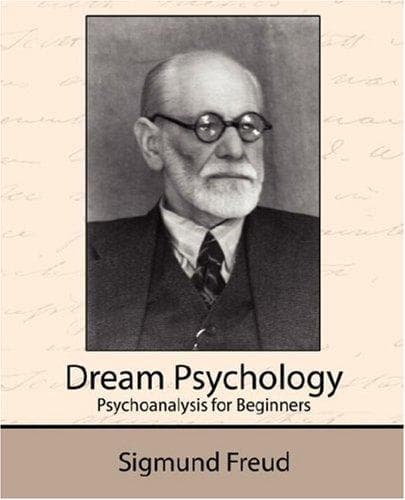
Dream Psychology: Psychoanalysis for BeginnersFreud, Sigmund
Science
Dream Psychology: Psychoanalysis for Beginners
Freud, Sigmund
Dreams; Psychoanalysis
withdrawn from the Forec., becomes the preliminary condition of
repression.
In the most favorable case the development of pain terminates as soon as
the energy has been withdrawn from the thoughts of transference in the
Forec., and this effect characterizes the intervention of the principle
of pain as expedient. It is different, however, if the repressed
unconscious wish receives an organic enforcement which it can lend to
its thoughts of transference and through which it can enable them to
make an effort towards penetration with their excitement, even after
they have been abandoned by the occupation of the Forec. A defensive
struggle then ensues, inasmuch as the Forec. reinforces the antagonism
against the repressed ideas, and subsequently this leads to a
penetration by the thoughts of transference (the carriers of the
unconscious wish) in some form of compromise through symptom formation.
But from the moment that the suppressed thoughts are powerfully occupied
by the unconscious wish-feeling and abandoned by the foreconscious
occupation, they succumb to the primary psychic process and strive only
for motor discharge; or, if the path be free, for hallucinatory revival
of the desired perception identity. We have previously found,
empirically, that the incorrect processes described are enacted only
with thoughts that exist in the repression. We now grasp another part of
the connection. These incorrect processes are those that are primary in
the psychic apparatus; _they appear wherever thoughts abandoned by the
foreconscious occupation are left to themselves, and can fill themselves
with the uninhibited energy, striving for discharge from the
unconscious_. We may add a few further observations to support the view
that these processes designated "incorrect" are really not
falsifications of the normal defective thinking, but the modes of
activity of the psychic apparatus when freed from inhibition. Thus we
see that the transference of the foreconscious excitement to the
motility takes place according to the same processes, and that the
connection of the foreconscious presentations with words readily
manifest the same displacements and mixtures which are ascribed to
inattention. Finally, I should like to adduce proof that an increase of
work necessarily results from the inhibition of these primary courses
from the fact that we gain a _comical effect_, a surplus to be
discharged through laughter, _if we allow these streams of thought to
come to consciousness_.
Public-domain text, read in full here on John Shaqi.
Reviews
Reviews
No reviews yet
Be the first to share your thoughts on this work.
Elsewhere in the archive
Join the Discussion
Join the discussion
Sign in to leave a comment or review.
Sign InorCreate an account