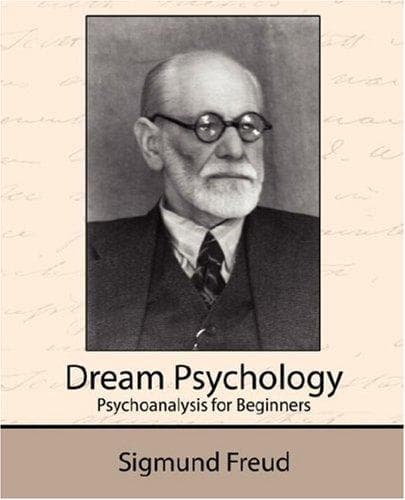
Dream Psychology: Psychoanalysis for BeginnersFreud, Sigmund
Science
Dream Psychology: Psychoanalysis for Beginners
Freud, Sigmund
Dreams; Psychoanalysis
The "tertium comparationis" in the comparisons just employed--_i.e._ the
sum placed at our free disposal in proper allotment--admits of still
finer application for the illustration of the dream structure. We can
recognize in most dreams a center especially supplied with perceptible
intensity. This is regularly the direct representation of the
wish-fulfillment; for, if we undo the displacements of the dream-work by
a process of retrogression, we find that the psychic intensity of the
elements in the dream thoughts is replaced by the perceptible intensity
of the elements in the dream content. The elements adjoining the
wish-fulfillment have frequently nothing to do with its sense, but prove
to be descendants of painful thoughts which oppose the wish. But, owing
to their frequently artificial connection with the central element, they
have acquired sufficient intensity to enable them to come to expression.
Thus, the force of expression of the wish-fulfillment is diffused over a
certain sphere of association, within which it raises to expression all
elements, including those that are in themselves impotent. In dreams
having several strong wishes we can readily separate from one another
the spheres of the individual wish-fulfillments; the gaps in the dream
likewise can often be explained as boundary zones.
Although the foregoing remarks have considerably limited the
significance of the day remnants for the dream, it will nevertheless be
worth our while to give them some attention. For they must be a
necessary ingredient in the formation of the dream, inasmuch as
experience reveals the surprising fact that every dream shows in its
content a connection with some impression of a recent day, often of the
most indifferent kind. So far we have failed to see any necessity for
this addition to the dream mixture. This necessity appears only when we
follow closely the part played by the unconscious wish, and then seek
information in the psychology of the neuroses. We thus learn that the
unconscious idea, as such, is altogether incapable of entering into the
foreconscious, and that it can exert an influence there only by uniting
with a harmless idea already belonging to the foreconscious, to which it
transfers its intensity and under which it allows itself to be
concealed. This is the fact of transference which furnishes an
explanation for so many surprising occurrences in the psychic life of
neurotics.
Public-domain text, read in full here on John Shaqi.
Reviews
Reviews
No reviews yet
Be the first to share your thoughts on this work.
Elsewhere in the archive
Join the Discussion
Join the discussion
Sign in to leave a comment or review.
Sign InorCreate an account