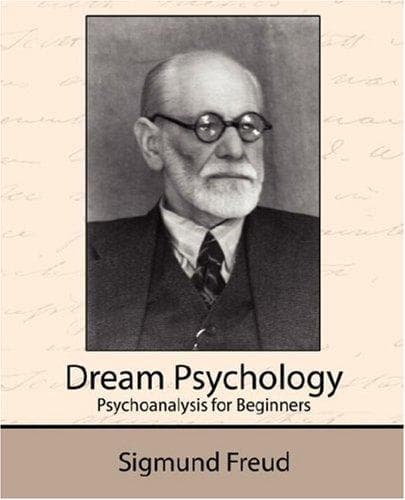
Dream Psychology: Psychoanalysis for BeginnersFreud, Sigmund
Science
Dream Psychology: Psychoanalysis for Beginners
Freud, Sigmund
Dreams; Psychoanalysis
The idea from the foreconscious which thus obtains an unmerited
abundance of intensity may be left unchanged by the transference, or it
may have forced upon it a modification from the content of the
transferring idea. I trust the reader will pardon my fondness for
comparisons from daily life, but I feel tempted to say that the
relations existing for the repressed idea are similar to the situations
existing in Austria for the American dentist, who is forbidden to
practise unless he gets permission from a regular physician to use his
name on the public signboard and thus cover the legal requirements.
Moreover, just as it is naturally not the busiest physicians who form
such alliances with dental practitioners, so in the psychic life only
such foreconscious or conscious ideas are chosen to cover a repressed
idea as have not themselves attracted much of the attention which is
operative in the foreconscious. The unconscious entangles with its
connections preferentially either those impressions and ideas of the
foreconscious which have been left unnoticed as indifferent, or those
that have soon been deprived of this attention through rejection. It is
a familiar fact from the association studies confirmed by every
experience, that ideas which have formed intimate connections in one
direction assume an almost negative attitude to whole groups of new
connections. I once tried from this principle to develop a theory for
hysterical paralysis.
If we assume that the same need for the transference of the repressed
ideas which we have learned to know from the analysis of the neuroses
makes its influence felt in the dream as well, we can at once explain
two riddles of the dream, viz. that every dream analysis shows an
interweaving of a recent impression, and that this recent element is
frequently of the most indifferent character. We may add what we have
already learned elsewhere, that these recent and indifferent elements
come so frequently into the dream content as a substitute for the most
deep-lying of the dream thoughts, for the further reason that they have
least to fear from the resisting censor. But while this freedom from
censorship explains only the preference for trivial elements, the
constant presence of recent elements points to the fact that there is a
need for transference. Both groups of impressions satisfy the demand of
the repression for material still free from associations, the
indifferent ones because they have offered no inducement for extensive
associations, and the recent ones because they have had insufficient
time to form such associations.
Public-domain text, read in full here on John Shaqi.
Reviews
Reviews
No reviews yet
Be the first to share your thoughts on this work.
Elsewhere in the archive
Join the Discussion
Join the discussion
Sign in to leave a comment or review.
Sign InorCreate an account