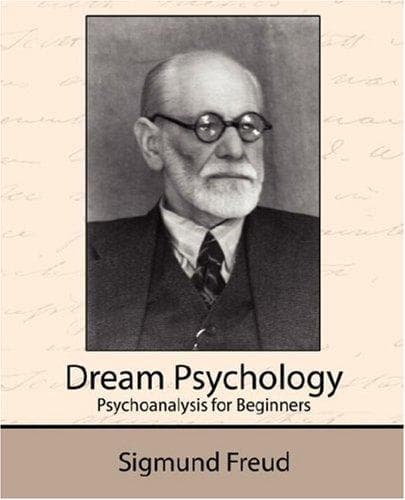
Dream Psychology: Psychoanalysis for BeginnersFreud, Sigmund
Science
Dream Psychology: Psychoanalysis for Beginners
Freud, Sigmund
Dreams; Psychoanalysis
[1] They share this character of indestructibility with all psychic acts
that are really unconscious--that is, with psychic acts belonging to the
system of the unconscious only. These paths are constantly open and
never fall into disuse; they conduct the discharge of the exciting
process as often as it becomes endowed with unconscious excitement To
speak metaphorically they suffer the same form of annihilation as the
shades of the lower region in the _Odyssey_, who awoke to new life the
moment they drank blood. The processes depending on the foreconscious
system are destructible in a different way. The psychotherapy of the
neuroses is based on this difference.
[2] Le Lorrain justly extols the wish-fulfilment of the dream: "Sans
fatigue serieuse, sans etre oblige de recourir a cette lutte opinatre et
longue qui use et corrode les jouissances poursuivies."
[3] This idea has been borrowed from _The Theory of Sleep_ by Liebault,
who revived hypnotic investigation in our days. (_Du Sommeil provoque_,
etc.; Paris, 1889.)
VII
THE FUNCTION OF THE DREAM
Since we know that the foreconscious is suspended during the night by
the wish to sleep, we can proceed to an intelligent investigation of the
dream process. But let us first sum up the knowledge of this process
already gained. We have shown that the waking activity leaves day
remnants from which the sum of energy cannot be entirely removed; or the
waking activity revives during the day one of the unconscious wishes; or
both conditions occur simultaneously; we have already discovered the
many variations that may take place. The unconscious wish has already
made its way to the day remnants, either during the day or at any rate
with the beginning of sleep, and has effected a transference to it. This
produces a wish transferred to the recent material, or the suppressed
recent wish comes to life again through a reinforcement from the
unconscious. This wish now endeavors to make its way to consciousness on
the normal path of the mental processes through the foreconscious, to
which indeed it belongs through one of its constituent elements. It is
confronted, however, by the censor, which is still active, and to the
influence of which it now succumbs. It now takes on the distortion for
which the way has already been paved by its transference to the recent
material. Thus far it is in the way of becoming something resembling an
obsession, delusion, or the like, _i.e._ a thought reinforced by a
transference and distorted in expression by the censor. But its further
progress is now checked through the dormant state of the foreconscious;
this system has apparently protected itself against invasion by
diminishing its excitements. The dream process, therefore, takes the
regressive course, which has just been opened by the peculiarity of the
sleeping state, and thereby follows the attraction exerted on it by the
memory groups, which themselves exist in part only as visual energy not
Public-domain text, read in full here on John Shaqi.
Reviews
Reviews
No reviews yet
Be the first to share your thoughts on this work.
Elsewhere in the archive
Join the Discussion
Join the discussion
Sign in to leave a comment or review.
Sign InorCreate an account