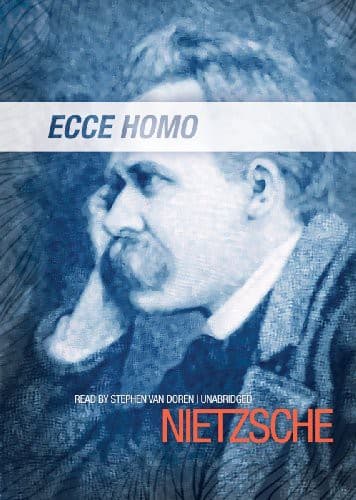
Ecce Homo: Complete Works, Volume SeventeenNietzsche, Friedrich Wilhelm
PhilosophyPhilosophy
Ecce Homo: Complete Works, Volume Seventeen
Nietzsche, Friedrich Wilhelm
Nietzsche, Friedrich Wilhelm, 1844-1900; Philosophers -- Germany -- Biography
And this final collapse might easily have been foreseen. Nietzsche's
sensorium, as his autobiography proves, was probably the most delicate
instrument ever possessed by a human being; and with this fragile
structure--the prerequisite, by the bye, of all genius,--his terrible
will compelled him to confront the most profound and most recondite
problems. We happen to know from another artist and profound thinker,
Benjamin Disraeli, who himself had experienced a dangerous breakdown,
what the consequences precisely are of indulging in excessive activity
in the sphere of the spirit, more particularly when that spirit is
highly organised. Disraeli says in _Contarini Fleming_ (Part iv. chap.
v.):--
"I have sometimes half believed, although the suspicion is
mortifying, that there is only one step between his state
who deeply indulges in imaginative meditation, and insanity;
for I well remember that at this period of my life, when
I indulged in meditation to a degree that would now be
impossible, and I hope unnecessary, my senses sometimes
appeared to be wandering."
And artists are the proper judges of artists,--not Oxford Dons, like
Dr. Schiller, who, in his imprudent attempt at dealing with something
for which his pragmatic hands are not sufficiently delicate, eagerly
av-ails himself of popular help in his article on Nietzsche in the
eleventh edition of the _Encyclopedia Britannica,_ and implies the
hackneyed and wholly exploded belief that Nietzsche's philosophy is
madness in the making. As German philosophies, however, are said to
go to Oxford only when they die, we may, perhaps, conclude from this
want of appreciation in that quarter, how very much alive Nietzsche's
doctrine still is.
Not that Nietzsche went mad so soon, but that he went mad so late is
the wonder of wonders. Considering the extraordinary amount of work
he did, the great task of the transvaluation of all values, which he
actually accomplished, and the fact that he endured such long years
of solitude, which to him, the sensitive artist to whom friends were
everything, must have been a terrible hardship, we can only wonder at
his great health, and can well believe his sister's account of the
phenomenal longevity and bodily vigour of his ancestors.
No one, however, who is initiated, no one who reads this work with
understanding, will be in need of this introductory note of mine; for,
to all who know, these pages must speak for themselves. We are no
longer in the nineteenth century. We have learned many things since
then, and if caution is only one of these things, at least it will
prevent us from judging a book such as this one, with all its apparent
pontifical pride and surging self-reliance, with undue haste, or with
that arrogant assurance with which the ignorance of "the humble" and
"the modest" has always confronted everything truly great.
ANTHONY M. LUDOVICI.
PREFACE
1
Public-domain text, read in full here on John Shaqi.
Reviews
Reviews
No reviews yet
Be the first to share your thoughts on this work.
Join the Discussion
Join the discussion
Sign in to leave a comment or review.
Sign InorCreate an account