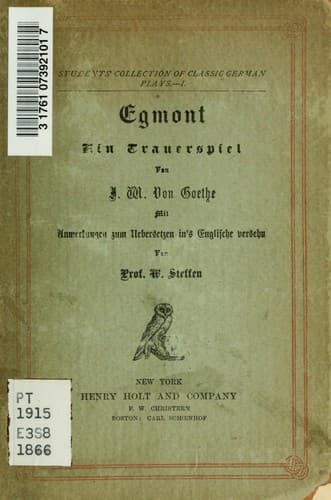
Egmont, Lamoraal, Graaf van, 1522-1568 -- Drama; Tragedies (Drama)
Secretary. It may become you to be without a fear, but those who know
and love you--
Egmont (looking over the letter). Then he recalls the old story of our
sayings and doings, one evening, in the wantonness of conviviality
and wine; and what conclusions and inferences were thence drawn and
circulated throughout the whole kingdom! Well, we had a cap and bells
embroidered on the sleeves of our servants' liveries, and afterwards
exchanged this senseless device for a bundle of arrows;--a still more
dangerous symbol for those who are bent upon discovering a meaning where
nothing is meant, These and similar follies were conceived and brought
forth in a moment of merriment. It was at our suggestion that a noble
troop, with beggars' wallets, and a self-chosen nickname, with mock
humility recalled the King's duty to his remembrance. It was at our
suggestion too--well, what does it signify? Is a carnival jest to be
construed into high treason? Are we to be grudged the scanty, variegated
rags, wherewith a youthful spirit and heated imagination would adorn the
poor nakedness of life? Take life too seriously, and what is it worth?
If the morning wake us to no new joys, if in the evening we have
no pleasures to hope for, is it worth the trouble of dressing and
undressing? Does the sun shine on me to-day, that I may reflect on what
happened yesterday? That I may endeavour to foresee and control, what
can neither be foreseen nor controlled,--the destiny of the morrow?
Spare me these reflections, we will leave them to scholars and
courtiers. Let them ponder and contrive, creep hither and thither,
and surreptitiously achieve their ends.--If you can make use of these
suggestions, without swelling your letter into a volume, it is well.
Everything appears of exaggerated importance to the good old man. 'Tis
thus the friend, who has long held our hand, grasps it more warmly ere
he quits his hold.
Secretary. Pardon me, the pedestrian grows dizzy when he beholds the
charioteer drive past with whirling speed.
Egmont. Child! Child! Forbear! As if goaded by invisible spirits, the
sun-steeds of time bear onward the light car of our destiny; and nothing
remains for us but, with calm self-possession, firmly to grasp the
reins, and now right, now left, to steer the wheels here from the
precipice and there from the rock. Whither he is hasting, who knows?
Does any one consider whence he came?
Secretary. My lord! my lord!
Public-domain text, read in full here on John Shaqi.
Reviews
Reviews
No reviews yet
Be the first to share your thoughts on this work.
Join the Discussion
Join the discussion
Sign in to leave a comment or review.
Sign InorCreate an account