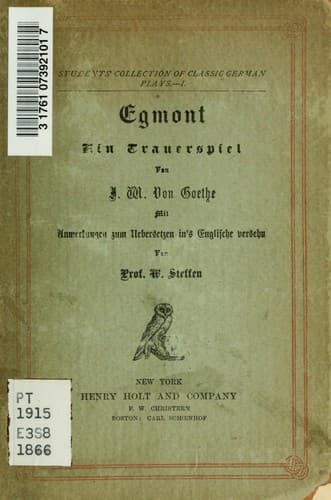
Egmont, Lamoraal, Graaf van, 1522-1568 -- Drama; Tragedies (Drama)
Silva. "We declare, after a strict and legal investigation, thee, Henry,
Count Egmont, Prince of Gaure, guilty of high treason, and pronounce
thy sentence:--That at early dawn thou be led from this prison to the
market-place, and that there, in sight of the people, and as a warning
to all traitors, thou with the sword be brought from life to death.
Given at Brussels." (Date and year so indistinctly read as to be
imperfectly heard by the audience.) "Ferdinand, Duke of Alva, President
of the Tribunal of Twelve." Thou knowest now thy doom. Brief time
remains for thee to prepare for the impending stroke, to arrange thy
affairs, and to take leave of thy friends.
[Exit Silva with followers. Ferdinand remains with two torch-bearers.
The stage is dimly lighted.
Egmont (stands for a time as if buried in thought, and allows Silva to
retire without looking round. He imagines himself alone, and, on raising
his eyes, beholds Alva's son).
Thou tarriest here? Wouldst thou by thy presence augment my amazement,
my horror? Wouldst thou carry to thy father the welcome tidings that
in unmanly fashion I despair? Go. Tell him that he deceives neither the
world nor me. At first it will be whispered cautiously behind his
back, then spoken more and more loudly, and when at some future day the
ambitious man descends from his proud eminence, a thousand voices will
proclaim--that 'twas not the welfare of the state, not the honour of the
king, not the tranquillity of the provinces, that brought him hither.
For his own selfish ends he, the warrior, has counselled war, that in
war the value of his services might be enhanced. He has excited this
monstrous insurrection that his presence might be deemed necessary
in order to quell it. And I fall a victim to his mean hatred, his
contemptible envy. Yes, I know it, dying and mortally wounded I may
utter it; long has the proud man envied me, long has he meditated and
planned my ruin.
Even then, when still young, we played at dice together, and the heaps
of gold, one after the other, passed rapidly from his side to mine;
he would look on with affected composure, while inwardly consumed with
rage, more at my success than at his own loss. Well do I remember the
fiery glance, the treacherous pallor that overspread his features when,
at a public festival, we shot for a wager before assembled thousands.
He challenged me, and both nations stood by; Spaniards and Netherlanders
wagered on either side; I was the victor; his ball missed, mine hit the
mark, and the air was rent by acclamations from my friends. His shot
now hits me. Tell him that I know this, that I know him, that the world
despises every trophy that a paltry spirit erects for itself by base and
surreptitious arts. And thou!
If it be possible for a son to swerve from the manners of his father,
practise shame betimes, while thou art compelled to feel shame for him
whom thou wouldst fain revere with thy whole heart.
Public-domain text, read in full here on John Shaqi.
Reviews
Reviews
No reviews yet
Be the first to share your thoughts on this work.
Elsewhere in the archive
Join the Discussion
Join the discussion
Sign in to leave a comment or review.
Sign InorCreate an account