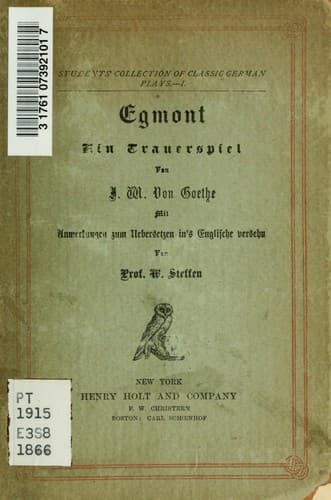
Egmont, Lamoraal, Graaf van, 1522-1568 -- Drama; Tragedies (Drama)
Ferdinand. I listen without interrupting thee! Thy reproaches fall like
blows upon a helmet. I feel the shock, but I am armed. They strike, they
wound me not; I am sensible only to the anguish that lacerates my heart.
Alas! Alas! Have I lived to witness such a scene? Am I sent hither to
behold a spectacle like this?
Egmont. Dost thou break out into lamentations? What moves, what agitates
thee thus? Is it a late remorse at having lent thyself to this infamous
conspiracy? Thou art so young, thy exterior is so prepossessing? Thy
demeanour towards me was so friendly, so unreserved! So long as I beheld
thee, I was reconciled with thy father; and crafty, ay, more crafty than
he, thou hast lured me into the toils. Thou art the wretch! The
monster! Who so confides in him, does so at his own peril; but who could
apprehend danger in trusting thee? Go! Go! rob me not of the few moments
that are left me! Go, that I may collect my thoughts, the world forget,
and first of all thyself!
Ferdinand. What can I say? I stand and gaze on thee, yet see thee not;
I am scarcely conscious of my own existence. Shall I seek to excuse
myself? Shall I assure thee that it was not till the last moment that I
was made aware of my father's intentions? That I acted as a constrained,
a passive instrument of his will? What signifies now the opinion thou
mayst entertain of me? Thou art lost; and I, miserable wretch, stand
here only to assure thee of it, only to lament thy doom.
Egmont. What strange voice, what unexpected consolation comes thus to
cheer my passage to the grave? Thou, the son of my first, of almost
my only enemy, thou dost pity me, thou art not associated with my
murderers? Speak! In what light must I regard thee?
Ferdinand. Cruel father! Yes, I recognize thy nature in this command.
Thou didst know my heart, my disposition, which thou hast so often
censured as the inheritance of a tender-hearted Mother. To mould me
into thine own likeness thou hast sent me hither. Thou dost compel me
to behold this man on the verge of the yawning grave, in the grasp of
an arbitrary doom, that I may experience the profoundest anguish; that
thus, rendered callous to every fate, I may henceforth meet every event
with a heart unmoved.
Egmont. I am amazed! Be calm! Act, speak like a man.
Ferdinand. Oh, that I were a woman! That they might say--what moves,
what agitates thee? Tell me of a greater, a more monstrous crime, make
me the spectator of a more direful deed; I will thank thee, I will say:
this was nothing.
Egmont. Thou dost forget thyself. Consider where thou art!
Ferdinand. Let this passion rage, let me give vent to my anguish! I will
not seem composed when my whole inner being is convulsed. Thee must
I behold here? Thee? It is horrible! Thou understandest me not! How
shouldst thou understand me? Egmont! Egmont!
(Falling on his neck.)
Egmont. Explain this mystery.
Ferdinand. It is no mystery.
Egmont. How can the fate of a mere stranger thus deeply move thee?
Public-domain text, read in full here on John Shaqi.
Reviews
Reviews
No reviews yet
Be the first to share your thoughts on this work.
Elsewhere in the archive
Join the Discussion
Join the discussion
Sign in to leave a comment or review.
Sign InorCreate an account