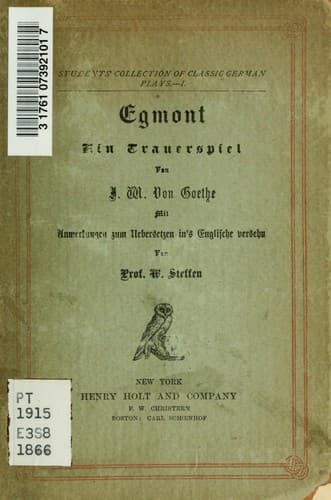
Egmont, Lamoraal, Graaf van, 1522-1568 -- Drama; Tragedies (Drama)
Egmont (stamping his foot). No deliverance!-Sweet life! Sweet, pleasant
habitude of existence and of activity! from thee must I part! So calmly
part! Not in the tumult of battle, amid the din of arms, the excitement
of the fray, dost thou send me a hasty farewell; thine is no hurried
leave; thou dost not abridge the moment of separation. Once more let me
clasp thy hand, gaze once more into thine eyes, feel with keen emotion,
thy beauty and thy worth, then resolutely tear myself away, and
say;--depart!
Ferdinand. Must I stand by, and look passively on; unable to save thee,
or to give thee aid! What voice avails for lamentation! What heart but
must break under the pressure of such anguish?
Egmont. Be calm!
Ferdinand. Thou canst be calm, thou canst renounce, led on by necessity,
thou canst advance to the direful struggle, with the courage of a hero.
What can I do? What ought I to do? Thou dost conquer thyself and us;
thou art the victor; I survive both myself and thee. I have lost my
light at the banquet, my banner on the field. The future lies before me,
dark, desolate, perplexed.
Egmont. Young friend, whom by a strange fatality, at the same moment,
I both win and lose, who dost feel for me, who dost suffer for me the
agonies of death,--look on me;--thou wilt not lose me. If my life was
a mirror in which thou didst love to contemplate thyself, so be also
my death. Men are not together only when in each other's presence;--the
distant, the departed, also live for us. I shall live for thee, and for
myself I have lived long enough. I have enjoyed each day; each day,
I have performed, with prompt activity, the duties enjoined by my
conscience. Now my life ends, as it might have ended, long, long, ago,
on the sands of Gravelines. I shall cease to live; but I have lived. My
friend, follow in my steps, lead a cheerful and a joyous life, and dread
not the approach of death.
Ferdinand. Thou shouldst have saved thyself for us, thou couldst have
saved thyself. Thou art the cause of thine own destruction. Often have
I listened when able men discoursed concerning thee; foes and friends,
they would dispute long as to thy worth; but on one point they were
agreed, none ventured to deny, every one confessed, that thou wert
treading a dangerous path. How often have I longed to warn thee! Hadst
thou then no friends?
Egmont. I was warned.
Ferdinand. And when I found all these allegations, point for point, in
the indictment, together with thy answers, containing much that might
serve to palliate thy conduct, but no evidence weighty enough fully to
exculpate thee--
Public-domain text, read in full here on John Shaqi.
Reviews
Reviews
No reviews yet
Be the first to share your thoughts on this work.
Elsewhere in the archive
Join the Discussion
Join the discussion
Sign in to leave a comment or review.
Sign InorCreate an account