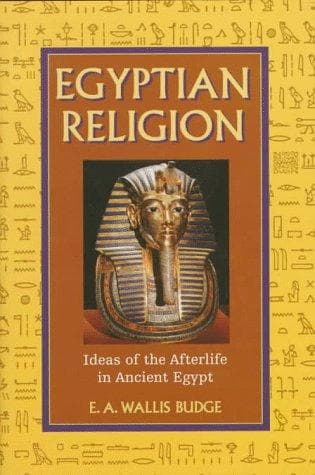
Egyptian Ideas of the Future LifeBudge, E. A. Wallis (Ernest Alfred Wallis), Sir
ReligionComparative
Egyptian Ideas of the Future Life
Budge, E. A. Wallis (Ernest Alfred Wallis), Sir
Egypt -- Religion; Eschatology, Egyptian; Future life
EGYPTIAN IDEAS
OF THE
FUTURE LIFE
BY
E.A. WALLIS BUDGE, M. A., LITT. D., D. LIT.
KEEPER Of THE EGYPTIAN AND ASSYRIAN ANTIQUITIES
OF THE BRITISH MUSEUM
WITH EIGHT ILLUSTRATIONS
_THIRD EDITION_
1908
To SIR JOHN EVANS, K. C. B., D. C. L., F. R. S., ETC., ETC., ETC. IN
GRATEFUL REMEMBRANCE OF MUCH FRIENDLY HELP AND ENCOURAGEMENT
PREFACE.
* * * * *
The following pages are intended to place before the reader in a handy
form an account of the principal ideas and beliefs held by the ancient
Egyptians concerning the resurrection and the future life, which is
derived wholly from native religious works. The literature of Egypt
which deals with these subjects is large and, as was to be expected, the
product of different periods which, taken together, cover several
thousands of years; and it is exceedingly difficult at times to
reconcile the statements and beliefs of a writer of one period with
those of a writer of another. Up to the present no systematic account of
the doctrine of the resurrection and of the future life has been
discovered, and there is no reason for hoping that such a thing will
ever be found, for the Egyptians do not appear to have thought that it
was necessary to write a work of the kind. The inherent difficulty of
the subject, and the natural impossibility that different men living in
different places and at different times should think alike on matters
which must, after all, belong always to the region of faith, render it
more than probable that no college of priests, however powerful, was
able to formulate a system of beliefs which would be received throughout
Egypt by the clergy and the laity alike, and would be copied by the
scribes as a final and authoritative work on Egyptian eschatology.
Besides this, the genius and structure of the Egyptian language are such
as to preclude the possibility of composing in it works of a
philosophical or metaphysical character in the true sense of the words.
In spite of these difficulties, however, it is possible to collect a
great deal of important information on the subject from the funereal and
religious works which have come down to us, especially concerning the
great central idea of immortality, which existed unchanged for thousands
of years, and formed the pivot upon which the religious and social life
of the ancient Egyptians actually turned. From the beginning to the end
of his life the Egyptian's chief thought was of the life beyond the
grave, and the hewing of his tomb in the rock, and the providing of its
furniture, every detail of which was prescribed by the custom of the
country, absorbed the best thoughts of his mind and a large share of his
worldly goods, and kept him ever mindful of the time when his mummified
body would be borne to his "everlasting house" in the limestone plateau
or hill.
Public-domain text, read in full here on John Shaqi.
Reviews
Reviews
No reviews yet
Be the first to share your thoughts on this work.
Join the Discussion
Join the discussion
Sign in to leave a comment or review.
Sign InorCreate an account