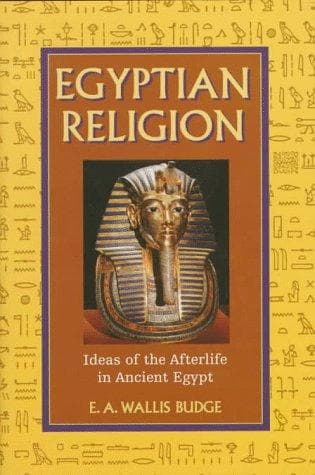
Egyptian Ideas of the Future LifeBudge, E. A. Wallis (Ernest Alfred Wallis), Sir
ReligionComparative
Egyptian Ideas of the Future Life
Budge, E. A. Wallis (Ernest Alfred Wallis), Sir
Egypt -- Religion; Eschatology, Egyptian; Future life
"'Thou art crowned with the majesty of thy beauties; thou mouldest thy
limbs as thou dost advance, and thou bringest them forth without
birth-pangs in the form of R[=a], as thou dost rise up in the
celestial height. Grant thou that I may come unto the heaven which is
everlasting, and unto the mountain where dwell thy favoured ones. May
I be joined unto those shining beings, holy and perfect, who are in
the underworld; and may I come forth with them to behold thy beauties
when thou shinest at eventide, and goest to thy mother Nut. Thou dost
place thyself in the west, and my hands adore [thee] when thou settest
as a living being. [Footnote: _i.e._, "because when thou settest thou
dost not die."] Behold, thou art the everlasting creator, and thou art
adored [as such when] thou settest in the heavens. I have given my
heart to thee without wavering, O thou who art mightier than the
gods.'
"A hymn of praise to thee, O thou who risest like unto gold, and who
dost flood the world with light on the day of thy birth. Thy mother
giveth thee birth, and straightway thou dost give light upon the path
of [thy] Disk, O thou great Light who shinest in the heavens. Thou
makest the generations of men to flourish through the Nile-flood, and
thou dost cause gladness to exist in all lands, and in, all cities,
and in all temples. Thou art glorious by reason of thy splendours, and
thou makest strong thy KA (_i.e._ Double) with, divine foods, O thou
mighty one of victories, thou Power of Powers, who dost make strong
thy throne against evil fiends--thou who art glorious in Majesty in
the Sektet boat, and most mighty in the [=A]tet [Footnote: The Sun's
evening and morning boats respectively.] boat!" This selection may be
fittingly closed by a short hymn [Footnote: From the Papyrus of Nekht
(Brit. Mus. No. 10,471).] which, though, of a later date, reproduces
in a brief form all the essentials of the longer hymns of the XVIIIth
dynasty (about B.C. 1700 to 1400).
Public-domain text, read in full here on John Shaqi.
Reviews
Reviews
No reviews yet
Be the first to share your thoughts on this work.
Join the Discussion
Join the discussion
Sign in to leave a comment or review.
Sign InorCreate an account