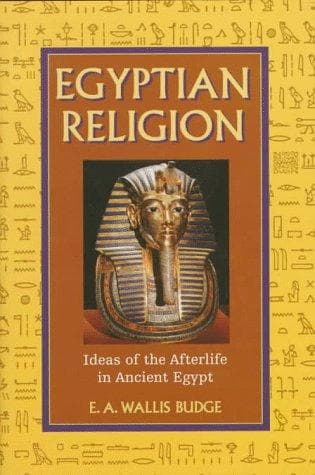
Egyptian Ideas of the Future LifeBudge, E. A. Wallis (Ernest Alfred Wallis), Sir
ReligionComparative
Egyptian Ideas of the Future Life
Budge, E. A. Wallis (Ernest Alfred Wallis), Sir
Egypt -- Religion; Eschatology, Egyptian; Future life
Throughout this book we have had to refer frequently to the "gods" of
Egypt; it is now time to explain who and what they were. We have already
shown how much the monotheistic side of the Egyptian religion resembles
that of modern Christian nations, and it will have come as a surprise to
some that a people, possessing such exalted ideas of God as the
Egyptians, could ever have become the byword they did through their
alleged worship of a multitude of "gods" in various forms. It is quite
true that the Egyptians paid honour to a number of gods, a number so
large that the list of their mere names would fill a volume, but it is
equally true that the educated classes in Egypt at all times never
placed the "gods" on the same high level as God, and they never imagined
that their views on this point could be mistaken. In prehistoric times
every little village or town, every district and province, and every
great city, had its own particular god; we may go a step farther, and
say that every family of any wealth and position had its own god. The
wealthy family selected some one to attend to its god, and to minister
unto his wants, and the poor family contributed, according to its means,
towards a common fund for providing a dwelling-house for the god, and
for vestments, etc. But the god was an integral part of the family,
whether rich or poor, and its destiny was practically locked up with
that of the family. The overthrow of the family included the overthrow
of the god, and seasons of prosperity resulted in abundant offerings,
new vestments; perhaps a new shrine, and the like. The god of the
village, although he was a more important being, might be led into
captivity along with the people of the village, but the victory of his
followers in a raid or fight caused the honours paid to him to be
magnified and enhanced his renown.
Public-domain text, read in full here on John Shaqi.
Reviews
Reviews
No reviews yet
Be the first to share your thoughts on this work.
Join the Discussion
Join the discussion
Sign in to leave a comment or review.
Sign InorCreate an account