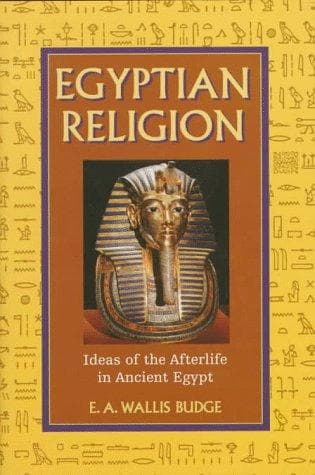
Egyptian Ideas of the Future LifeBudge, E. A. Wallis (Ernest Alfred Wallis), Sir
ReligionComparative
Egyptian Ideas of the Future Life
Budge, E. A. Wallis (Ernest Alfred Wallis), Sir
Egypt -- Religion; Eschatology, Egyptian; Future life
In the interval which elapsed between the period of the prehistoric
burials and the IVth dynasty, the Egyptian formulated certain theories
about the component parts of his own body, and we must consider these
briefly before we can describe the form in which the dead were believed
to rise. The physical body of a man was called KHAT, a word which
indicates something in which decay is inherent; it was this which was
buried in the tomb after mummification, and its preservation from
destruction of every kind was the object of all amulets, magical
ceremonies, prayers, and formulae, from the earliest to the latest
times. The god Osiris even possessed such a body, and its various
members were preserved as relics in several shrines in Egypt. Attached
to the body in some remarkable way was the KA, or "double," of a man; it
may be defined as an abstract individuality or personality which was
endowed with all his characteristic attributes, and it possessed an
absolutely independent existence. It was free to move from place to
place upon earth at will, and it could enter heaven and hold converse
with the gods. The offerings made in, the tombs at all periods were
intended for the nourishment of the KA, and it was supposed to be able
to eat and drink and to enjoy the odour of incense. In the earliest
times a certain portion of the tomb was set apart for the use of the KA,
and the religious organization of the period ordered that a class of
priests should perform ceremonies and recite prayers at stated seasons
for the benefit of the KA in the KA chapel; these men were known as "KA
priests." In the period when the pyramids were built it was firmly
believed that the deceased, in some form, was able to be purified, and
to sit down and to eat bread with it "unceasingly and for ever;" and the
KA who was not supplied with a sufficiency of food in the shape of
offerings of bread, cakes, flowers, fruit, wine, ale, and the like, was
in serious danger of starvation.
The soul was called BA, and the ideas which the Egyptians held
concerning it are somewhat difficult to reconcile; the meaning of the
word seems to be something like "sublime," "noble," "mighty." The BA
dwelt in the KA, and seems to have had the power of becoming corporeal
or incorporeal at will; it had both substance and form, and is
frequently depicted on the papyri and monuments as a human-headed hawk;
in nature and substance it is stated to be ethereal. It had the power to
leave the tomb, and to pass up into heaven where it was believed to
enjoy an eternal existence in a state of glory; it could, however, and
did, revisit the body in the tomb, and from certain texts it seems that
it could re-animate it and hold converse with it. Like the heart AB it
was, in some respects, the seat of life in man. The souls of the blessed
dead dwelt in heaven with the gods, and they partook of all the
celestial enjoyments for ever.
Public-domain text, read in full here on John Shaqi.
Reviews
Reviews
No reviews yet
Be the first to share your thoughts on this work.
Elsewhere in the archive
Join the Discussion
Join the discussion
Sign in to leave a comment or review.
Sign InorCreate an account